Engineers Garage

  • Electronic Projects & Tutorials
    • Electronic Projects
      • Arduino Projects
      • AVR
      • Raspberry pi
      • ESP8266
      • BeagleBone
      • 8051 Microcontroller
      • ARM
      • PIC Microcontroller
      • STM32
    • Tutorials
      • Audio Electronics
      • Battery Management
      • Brainwave
      • Electric Vehicles
      • EMI/EMC/RFI
      • Hardware Filters
      • IoT tutorials
      • Power Tutorials
      • Python
      • Sensors
      • USB
      • VHDL
    • Circuit Design
    • Project Videos
    • Components
  • Articles
    • Tech Articles
    • Insight
    • Invention Stories
    • How to
    • What Is
  • News
    • Electronic Product News
    • Business News
    • Company/Start-up News
    • DIY Reviews
    • Guest Post
  • Forums
    • EDABoard.com
    • Electro-Tech-Online
    • EG Forum Archive
  • DigiKey Store
    • Cables, Wires
    • Connectors, Interconnect
    • Discrete
    • Electromechanical
    • Embedded Computers
    • Enclosures, Hardware, Office
    • Integrated Circuits (ICs)
    • Isolators
    • LED/Optoelectronics
    • Passive
    • Power, Circuit Protection
    • Programmers
    • RF, Wireless
    • Semiconductors
    • Sensors, Transducers
    • Test Products
    • Tools
  • Learn
    • eBooks/Tech Tips
    • Design Guides
    • Learning Center
    • Tech Toolboxes
    • Webinars & Digital Events
  • Resources
    • Digital Issues
    • EE Training Days
    • LEAP Awards
    • Podcasts
    • Webinars / Digital Events
    • White Papers
    • Engineering Diversity & Inclusion
    • DesignFast
  • Guest Post Guidelines
  • Advertise
  • Subscribe

What are level sensors?

By Preeti Jain May 15, 2021

On 28th March 1979, at Three Mile Island nuclear power plant in USA, part of the core melted in the # 2 reactor. The TMI-2 reactor was destroyed. The cause of the accident was the little malfunction in the secondary cooling circuit which allowed temperature in the primary coolant to rise. This caused the reactor to shut down automatically. This situation developed because the level controls turned off the coolant to the reactor when they detected presence of cooling water near the top of the tank. The water at the top was not because of the tank got completely filled, it was because the water was too little in the tank that it got boiled and swelled up to the top of the tank.
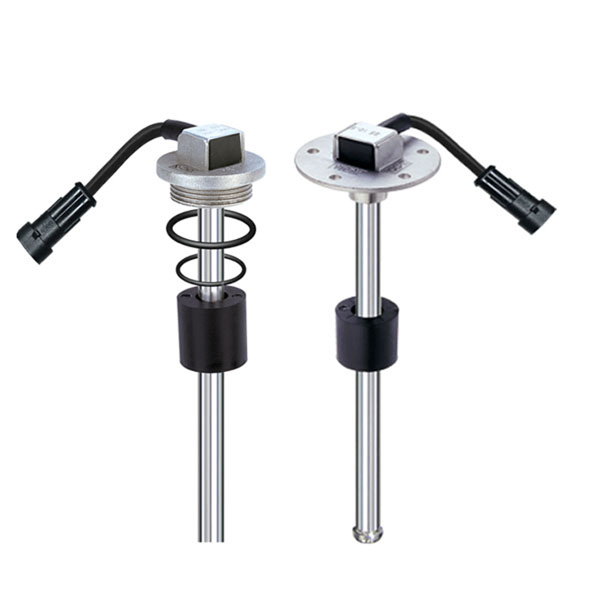
 
The incident is an example signifying the importance of fluid level sensors and their proper functioning. They are important not only in nuclear plants but in lot many applications. Every car, truck and motorcycle is equipped with a fuel level sensor to measure the amount of gasoline left in the fuel tank. In addition, there are sensors for level measurement of engine oil, brake / power steering fluid, cooling water, windshield cleaning liquid, etc. Industrial applications include liquid level sensing in water treatment tanks, transport and storage tanks, in the petrochemical industry for liquids such as petrol, etc. Liquid level measurement is important in household applications for devices such as automated coffee machines, water dispensers, juice squeezers, water evaporators, steamers, fridges and freezers, boilers, heating systems, dishwashers, washing machines, steam irons, etc.
 
In short, level sensors are one of the very important sensors and play very important role in variety of consumer/ industrial applications. As with other type of sensors, level sensors are available or can be designed using variety of sensing principles. Selection of an appropriate type of sensor suiting to the application requirement is very important.
An image showing level sensor
Fig. 1: An Image Showing Level Sensor
 
WHAT IS A LEVEL SENSOR
Wide spectrum of sensors is available in the market and commonly, they are classified based on the specific application of the sensor. Sensor used for measuring humidity is termed as humidity sensor, the one used for measurement of pressure is called pressure sensor, sensor used for measurement of displacement is called position sensor and so on though all of them may be using the similar sensing principle. In a similar fashion, the sensor used for measurement of fluid levels is called a level sensor.
Quite obvious from its name, level sensors are used to measure the level of the free-flowing substances. Such substances include liquids like water, oil, slurries, etc as well as solids in granular/powder form (solids which can flow). These substances tend to get settled in the container tanks due to gravity and maintain their level in rest state. Level sensors measure their level against a pre-set reference.
 

Classification

CLASSIFICATION-BASED ON SENSING POINTS
Depending upon the number of location where presence of a fluid (or fluidic solids) is to be sensed, level sensors can be broadly classified under three categories:
1.      Single Point Level Sensors -These sensors are used where fluid level is to be sensed only at single location.
Diagram showing Single Point Level Sensors
Fig. 2: Diagram showing Single Point Level Sensors
2.      Multi-point Level Sensors – These sensors are used where fluid level is to be sensed at number of locations single location.
Diagram showing Multi-point Level Sensors
Fig. 3: Diagram showing Multi-point Level Sensors
3.      Continuous Level Sensors – These sensors are used where fluid level at all locations is to sensed
Diagram showing Continuous Level Sensors
Fig. 4: Diagram showing Continuous Level Sensors
CLASSFICATION-BASED ON SENSING PRINCIPLES
A wide variety of sensing principles are used are used for measurement of liquids, fluidic solids, slurries, etc. These are explained below
·         Float Level Sensors
In these level sensors, a float moves with the liquid surface. The float is connected to a core via a spring. A magnetic reed switch is mounted in the hermetically sealed core and the core moves inside a stem with the float movement. The stem is encircles by powerful magnets. As the float rises or lowers with liquid level, the reed switch gets operated due to the magnetic field generated by the magnets.
Figure explaining priciple of float level sensors
Fig. 5: Figure Explaining Principle of Float Level Sensors
Image showing diffrent parts of float level sensors
Fig. 6: Image Showing Diffrent Parts of Float Level Sensors
These sensors are also designed by keeping the stem and the core (with magnetic reed switch) stationary and making magnets part of the movable float. For multipoint level sensors multiple magnets/ multiple reed switches (depending upon the design) are used.
The principle of sensors (floats moving with the liquid level) can be coupled to dial gauges. Using buoyancy, they can form Visual liquid level indicators.

Resistive, Capacitive

·         Resistive Level Sensors
Variable resistors are widely used in fuel level sensing. A wiper, connected to a lever arm with a float, moves across continuous resistive track.
Diagram showing resistive level sensors used in fuel level sensing
Fig. 7: Diagram Showing Resistive Level Sensors used in Fuel Level Sensing
The sensor works on potentiometric measuring principle. Current is made to flow through the resistance. Voltage drops linearly across this resistance. Slider across this resistance is connected to a float. Voltage output is taken between the slider and one end of the resistance. Thus with the varying fluid levels, slider moves and the output voltage varies.
A variant of this type uses conductivity of the liquid under measurement. Current pulses are sent through a sensor electrode (electrically insulated from the tank or external tube). When sensor electrode is immersed into a conductive liquid, an electrical connection is created. The electrical potential is proportional to the liquid level and is measured via a counter-electrode or the tank wall. It is used for continuous filling level measurement and is suitable for all electrically conductive liquids.
·         Capacitive Level Sensors
As capacitance depends upon overlapping area between the plates, distance between the plates and the dielectric material between the plates, any of the three can be varies to design a useful capacitive sensor.
One of the simplest capacitive fluid level sensors is shown in figure. It comprises of two concentric tubes immersed in the fluid whose level is to be measured. Since the overlapping area between the plates and the distance between the plates is fixed, the capacitance becomes a function of the dielectric between the plates, i.e., fluid between the two concentric tubes. As the fluid level changes, the capacitance also changes. This capacitance becomes the function of the fluid level.
Image showing typical capacitive fluid level sensors with concentric tubes
Fig. 8: Image showing Typical Capacitive Fluid Level Sensors with Concentric Tubes
Another variant of this sensor is the one which uses parallel plates instead of concentric tubes. In this case also, change in the fluid level will change the effective dielectric constant and so the capacitance between the plates.
Image showing typical capacitive fluid level sensors with parallel plates
Fig. 9: Image Showing Typical Capacitive Fluid Level Sensors with Parallel Plates

Pressure, Hall Effect, Ultrasonic

·         Pressure Based Level Sensors
Pressure is defined as the force per unit area. The pressure at any depth, in a static fluid is equal to the weight of the liquid acting on a unit area at that depth plus the pressure acting on the surface of the liquid. Level measurement based on pressure measurement is also known as hydrostatic tank gauging.
It relies on the principle that the difference between two pressures is equal to the height of the liquid multiplied by specific gravity. So, force at the bottom of the fluid container depends only upon the height of the liquid level and therefore, with the measured hydrostatic pressure and the knowledge of specific gravity of the fluid, level measurement is performed.
Pressure-Based-Level-Sensors.jpg
Fig. : 10
Since these are used for level measurement of corrosive liquids/ water, etc., chemical compatibility of the sensing element should be ascertained. Also, sensors must be calibrated separately for different liquids as the specific gravities are different.
·         Hall Based Level Sensors
Hall based level sensors have been designed in various configuration. A rotating lever sensor is shown in the figure below.
Diagram showing rotating level sensor based on hall effect
Fig. 11: Diagram Showing Rotating Level Sensor based on Hall Effect
A linear Hall sensor is placed at the centre of diametrally magnetised ring magnet, surrounded by the soft iron magnet to guide the flux. Hall sensor measures only the vertical component of magnetic field. Thus as the ring moves with the lever, the component of magnetic field measured by the Hall Sensor varies. Thus, the output of Hall sensor becomes a function of the level of the fluid.
Graph representing output of Hall sensor as function of fluid lelev
Fig. 12: Graph Representing Output of Hall Sensor as Function of Fluid Level
 
Hall Sensors can be used in vertical float systems. Depending on whether continuous or discrete level measurement is needed, an array of hall sensors can be placed at desired points. The magnets become the part of the floats. Hence, with the movement of the float, output of Hall sensors will vary.
Image showing hall sensors used in vertical float syatem
Fig. 13: Image Showing Hall Sensors used in Vertical Float System
Hall based sensors offer good reliability, small dimensions, wide operating voltages and are available at relatively low costs. All these features make them very attractive option amongst variety of other sensors.
·         Ultrasonic Level Sensors
Ultrasonic level instruments operate on the basic time-of-flight principle using sound waves to determine liquid/solid/slurries level.
Ultrasonic Level sensors comprises of two elements; a high efficiency transducer and, an associated electronic transceiver. Complete return trip time between transmitted  ultrasonic pulse and reflected echo is measured to determine the fluid level.
The frequency range for ultrasonic methods is in the range of 15…200 kHz. The lower frequency instruments are used for more difficult applications; such as longer distances and solid level measurements and those with higher frequency are used for shorter liquid level measurements.
They can be used as single point level sensor or continuous level sensors

Image showing ultrasonic level sensors based on time-of-flight principle using sound waves

Fig. 14: Image Showing Ultrasonic Level Sensors Based on Time-Of-Flight Principle using Sound Waves

Also read article on Ultrasonic Sensors


Radar Level, Optical

·         Radar Level Sensors
Radar Level Sensors are fundamentally very similar to the ultrasonic levels; only difference between the two is the use of frequencies. Radar level measurement is also based on the principle of measurement of the time elapsed between the transmission of a microwave pulse and the reception of the reflected echo.
Radar Level Sensors.jpg
Range resolution and frequency are two crucial parameters which should be considered while selecting these sensors. Accuracy of such sensors relies on the application, antenna and its installation, and also on quality of signal processing software.
·         Optical Sensors
It is a contact-type sensor and utilizes principle of optical reflection. Theses sensor houses an infrared LED and an IR photodetector. Light emitted from the LED is directed into a prism; the prism forms the tip of the sensor. As long as the prism is out of contact with the liquid, emitted light is reflected back to the receiver. However, when the prism gets immersed in the prism, the light gets refracted out into the liquid, and therefore very little or no light reaches the receiver. Thus, based upon the amount of reflected light, presence or absence of a liquid is sensed.
·         ExoSensors
ExOsense™ sensor (from Gems Sensors and controls) uses proprietary transducer technology employing piezoelectric material. When piezoelectric material is excited, it creates an acoustic signal as a function of the natural resonance of the material. ExOsense sensors generate this acoustic signal, direct it through the bottle wall and sense the reflection pulse.
The amount of energy that is reflected is determined by the “acoustic impedance mismatch” of the materials in use. For example, if sound passes through two materials with similar acoustic impedances, very little energy will be reflected. If sound passes through two materials with dissimilar impedance values, the majority of the acoustic energy will be reflected. The acoustic impedance mismatch provides the basis for the detection of liquid level.
Optical-Sensors.jpg
 

Selection of Sensors

SELECTION OF LEVEL SENSORS
There exists extensive variety of commercial solutions available for position sensing and level sensing. Amongst the available options, designers can select best possible technologies to meet their commercial as well as engineering goals. But this also generates a problem of plenty.
Problem of plenty, i.e., availability of too many options often confuse the designers rather than facilitating them. Level sensing, a form a position sensing, can be done using so many different technologies – Inductive, capacitive, mechanical, magneto resistive, Hall effect, optical, etc. The list is not exhaustive. More than one solution may be a viable solution for a particular application and that’s where the confusion arises.
·         Number of questions must be asked while selecting a sensor
·         Points of level sensing required
·         Measurement Range
·         Is the material being measured electrically conductive?
·         Is sensor to be placed inside material or can it be external?
·         Is material solid or liquid?
·         Type of measurement required – contact or non-contact ?
·         Acceptable accuracy, , precision and resolution
·         Operating temperature range
·         Type of output – analog, digital, etc.
 
All these need to be determined for selection the proper sensing technology. Of course, answering these questions is not a straightforward task. But this is where system designer’s skill set is put to test.


You may also like:


  • How does LoRa modulation enable long-range communication?

  • What battery chemistries are used in electric vehicles?

  • What are the different types of EV charging connectors?

  • What is Wireless Electric Vehicle Charging System (WEVCS)?

  • What are the top tools for developing embedded software?

  • What is the Modbus protocol and how does it work?

Filed Under: Sensors, Tech Articles, Tutorials
Tagged With: hall effect, level sensor, pressure, sensor, water
 

Next Article

← Previous Article
Next Article →

Questions related to this article?
👉Ask and discuss on Electro-Tech-Online.com and EDAboard.com forums.


Tell Us What You Think!! Cancel reply

You must be logged in to post a comment.

EE TECH TOOLBOX

“ee
Tech Toolbox: Internet of Things
Explore practical strategies for minimizing attack surfaces, managing memory efficiently, and securing firmware. Download now to ensure your IoT implementations remain secure, efficient, and future-ready.

EE Learning Center

EE Learning Center
“engineers
EXPAND YOUR KNOWLEDGE AND STAY CONNECTED
Get the latest info on technologies, tools and strategies for EE professionals.

HAVE A QUESTION?

Have a technical question about an article or other engineering questions? Check out our engineering forums EDABoard.com and Electro-Tech-Online.com where you can get those questions asked and answered by your peers!


RSS EDABOARD.com Discussions

  • Voltage mode pushpull is a nonsense SMPS?
  • Input impedance matching network
  • High Side current sensing
  • The comparison of different Tcl script checkers
  • Reducing "shoot-through" in offline Full Bridge SMPS?

RSS Electro-Tech-Online.com Discussions

  • Is AI making embedded software developers more productive?
  • Back to the old BASIC days
  • Parts required for a personal project
  • PIC KIT 3 not able to program dsPIC
  • Failure of polypropylene motor-run capacitors

Featured – RPi Python Programming (27 Part)

  • RPi Python Programming 21: The SIM900A AT commands
  • RPi Python Programming 22: Calls & SMS using a SIM900A GSM-GPRS modem
  • RPi Python Programming 23: Interfacing a NEO-6MV2 GPS module with Raspberry Pi
  • RPi Python Programming 24: I2C explained
  • RPi Python Programming 25 – Synchronous serial communication in Raspberry Pi using I2C protocol
  • RPi Python Programming 26 – Interfacing ADXL345 accelerometer sensor with Raspberry Pi

Recent Articles

  • What is AWS IoT Core and when should you use it?
  • AC-DC power supply extends voltage range to 800 V DC
  • Infineon’s inductive sensor integrates coil system driver, signal conditioning circuits and DSP
  • Arm Cortex-M23 MCU delivers 87.5 µA/MHz active mode
  • STMicroelectronics releases automotive amplifiers with in-play open-load detection

EE ENGINEERING TRAINING DAYS

engineering

Submit a Guest Post

submit a guest post
Engineers Garage
  • Analog IC TIps
  • Connector Tips
  • Battery Power Tips
  • DesignFast
  • EDABoard Forums
  • EE World Online
  • Electro-Tech-Online Forums
  • EV Engineering
  • Microcontroller Tips
  • Power Electronic Tips
  • Sensor Tips
  • Test and Measurement Tips
  • 5G Technology World
  • Subscribe to our newsletter
  • About Us
  • Contact Us
  • Advertise

Copyright © 2025 WTWH Media LLC. All Rights Reserved. The material on this site may not be reproduced, distributed, transmitted, cached or otherwise used, except with the prior written permission of WTWH Media
Privacy Policy

Search Engineers Garage

  • Electronic Projects & Tutorials
    • Electronic Projects
      • Arduino Projects
      • AVR
      • Raspberry pi
      • ESP8266
      • BeagleBone
      • 8051 Microcontroller
      • ARM
      • PIC Microcontroller
      • STM32
    • Tutorials
      • Audio Electronics
      • Battery Management
      • Brainwave
      • Electric Vehicles
      • EMI/EMC/RFI
      • Hardware Filters
      • IoT tutorials
      • Power Tutorials
      • Python
      • Sensors
      • USB
      • VHDL
    • Circuit Design
    • Project Videos
    • Components
  • Articles
    • Tech Articles
    • Insight
    • Invention Stories
    • How to
    • What Is
  • News
    • Electronic Product News
    • Business News
    • Company/Start-up News
    • DIY Reviews
    • Guest Post
  • Forums
    • EDABoard.com
    • Electro-Tech-Online
    • EG Forum Archive
  • DigiKey Store
    • Cables, Wires
    • Connectors, Interconnect
    • Discrete
    • Electromechanical
    • Embedded Computers
    • Enclosures, Hardware, Office
    • Integrated Circuits (ICs)
    • Isolators
    • LED/Optoelectronics
    • Passive
    • Power, Circuit Protection
    • Programmers
    • RF, Wireless
    • Semiconductors
    • Sensors, Transducers
    • Test Products
    • Tools
  • Learn
    • eBooks/Tech Tips
    • Design Guides
    • Learning Center
    • Tech Toolboxes
    • Webinars & Digital Events
  • Resources
    • Digital Issues
    • EE Training Days
    • LEAP Awards
    • Podcasts
    • Webinars / Digital Events
    • White Papers
    • Engineering Diversity & Inclusion
    • DesignFast
  • Guest Post Guidelines
  • Advertise
  • Subscribe