As we discussed earlier about the amazing world of robotics, it’s believed that fully autonomous robots weren’t developed until the second half of the 20th Century. In all these years, a lot of new inventions have taken place from drones to nanobots; not to forget the animal robots and humanoids that look just like living beings.
However, this is not it! There is a lot more than what has been explored till now. The future of robotics would be re-defined by soft robotics, a concept that is still unknown to the masses. Let’s take a stroll through the tidbits of the concept and comprehend how it has become the new fad in the robotics world.
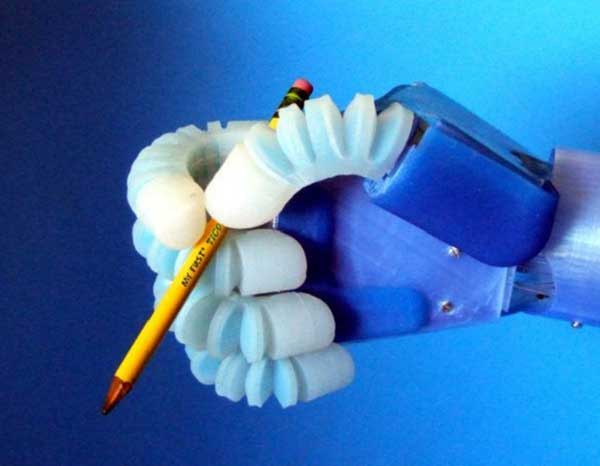
A soft Robot Hand (Image Courtesy: Tech Gen Mag)
What is Soft Robotics?
Soft Robotics is a branch of Robotics that deals with the design, development, and construction of soft, flexible robots with the movements similar to that of the biological organisms. These make use of soft and deformable materials for being built, such as silicone, plastic, rubber, fabric or mechanical parts like springs. Owing to a high flexibility, soft robots can interact with their environment quite easily and can undergo large deformation depending on the structural compliance.
Living beings are naturally programmed to move and interact with their environment. This is because their body is built of actuators, sensors, grippers, along with both hard and soft structures. The same principle applies to soft robots; in order to make them interact easily with the environment and provide a biological maneuverability, these robots are built with different materials.
Soft Robotics is Re-shaping Robotics
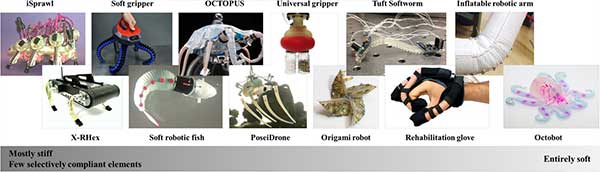
Range of Robots from Stiff to Soft (Image Courtesy: Science Robotics)
Significant changes are happening regarding the improvement in materials, thereby literally re-shaping the field of robotics. The concept of soft robotics is giving way to lowered costs, enhanced capabilities, as well as, safer interactions with humans. The concept has completely modified the way conventional robots in automotive, medical, and industrial applications were constructed and operated.
Most of these robots are inspired by flexible creatures like octopus and caterpillars. These are built of such materials that allow them to mold their shape and movement as per their surroundings. Appearing to be a structure of just bones and joint, soft robots are able to stretch, twist, turn, or squish in unimaginable ways; much like a living organism.
Soft Robotics Technology
Much like the modern gadgets that are developed into more portable forms as compared to the previous generation models, the soft robots have ditched the hard skeletons of the earlier heavy machinery robots. These modern robots can transform their shape and size, wrap around objects, interact with humans more safely, and can even hold objects as fragile as a tomato.
As per the SRI Robotics Program, there are 3 key technologies that are responsible for this evolution of robotics. These are:
Electroactive Polymer:

Electroactive Polymer aka artificial muscles (Image Courtesy: sri)
Electroactive Polymer or artificial muscles expand when the voltage is applied and contract when the voltage is removed, thereby converting electrical energy into mechanical motion. This helps the robot to move with the same dexterity as humans. The material also facilitates the robot to change the surface texture and develop skins that can sense pressure and contact.
These polymers can even be embedded in clothing and fabrics to measure motions and forces in the form of wearables. In fact, many organisations are working on polymer materials based on SRI licensing for a wide range of applications where soft, flexible and electrically-active actuation and sensing are needed.
Soft Grippers
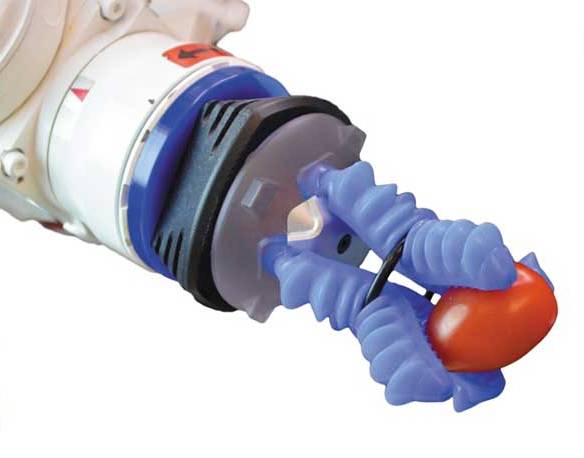
Soft Grippers (Image Courtesy: nature)
Unlike the rigid grippers, their soft counterparts need minimum sensing and control to pick up objects. For example, in jamming grippers, a flexible sack is filled with a powder-like substance such that it can conform around an object of any shape. Then a vacuum process takes place which makes the gripper rigid so as to grasp any object through friction, without the need for any complex processing.
Electroadhesion Technology
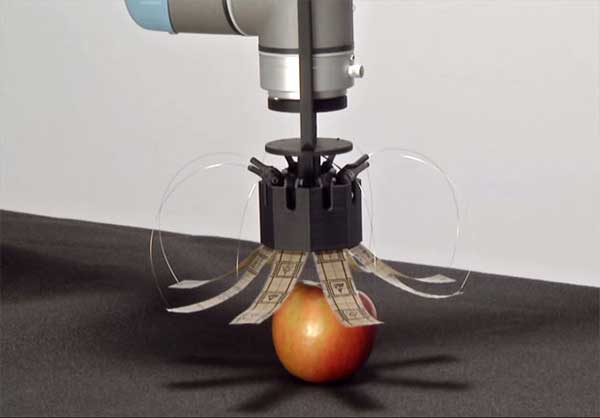
Electroadhesion Technology (Image Courtesy: lenergreek)
In this technology, electrostatic forces are used to pick up objects that are too delicate for the frictional forces to work. Much like rubbing a balloon on hair creates electrostatic attraction, this technology can be used to grip any object. The SRI team has used it in wall-jumping robots that work in even damp or rough surfaces.
Electrolaminate technology
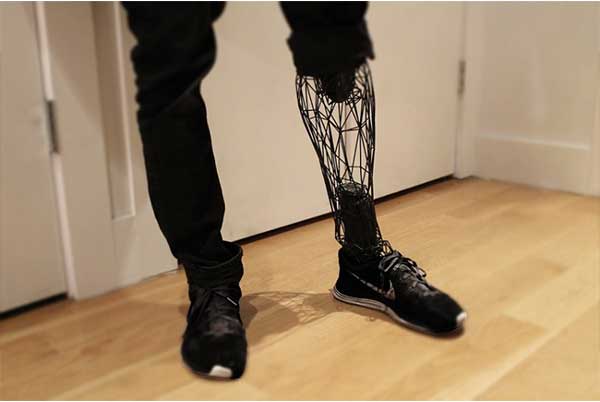
MIT’s FitSocket technology for prosthetic limbs (Image Courtesy: laughingsquid)
It can make a material change from soft to hard, on demand and that too without adding significant bulk, mass or power to the materials. The technology uses low-cost and lightweight flexible polymers that aid in great stiffness variation and elongation with quick reaction.
The electrolaminates have been equipped with MIT’s FitSocket technology for prosthetic limbs. The straps made of electrolaminate materials connect the human body to the prosthetic limbs. When the limbs are in motion, the straps get rigid while they get soft and flexible when the limbs are at rest.
Some Famous Soft Robotics Projects
Octobot
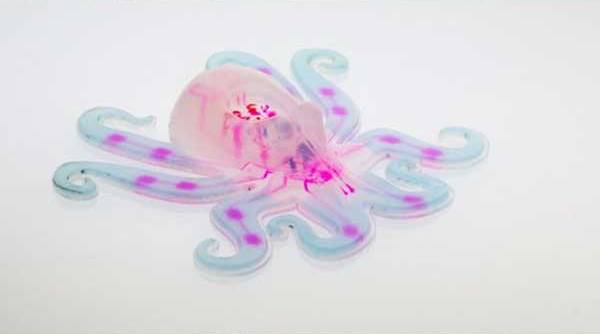
Octobot: World’s first fully autonomous soft robot (Image Courtesy: bbc)
A team of researchers at Harvard University have developed the world’s first entirely soft and autonomous robot called Octobot. As the name suggests, the robot is inspired by the structure of an octopus, which is strong even without any internal skeleton. It has been built by utilizing a combination of embedded 3D printing, molding, and soft lithography.
With the absence of any rigid components, Octobot uses a pneumatic mechanism and is powered by gas under pressure. A chemical reaction inside the bot transforms the liquid fuel into gas which flows into its arms, inflating them like a balloon. It also contains a logic circuit that autonomously directs fuel, thereby controlling the reaction.
Caterpillar Micro-Robot
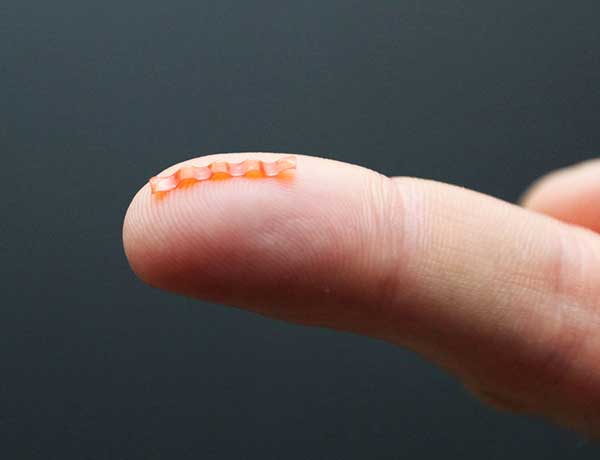
Caterpillar Micro-Robot (Image Courtesy: Popular Science)
Researchers at the University of Warsaw have developed a bio-inspired microrobot that not only looks exactly like a caterpillar but also mimics its movements and characteristics in natural scale. The 15-mm soft robot can travel on flat surfaces, climb slopes, squeeze through narrow slits and even carry loads.
Its body is made of a light-sensitive elastomer stripe with patterned molecular alignment. It controls the traveling deformation and can push objects as heavy as ten times its own mass. The robot has an immense potential for future applications, particularly in challenging environments.
Exo-Glove Poly
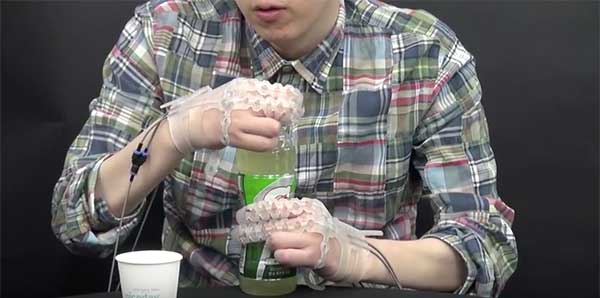
Exo-Glove Poly (Image Courtesy: youtube)
Associate Professor Kyu-Jin Cho from Seoul National University along with his team has developed a device that lies between a wearable gadget and a prosthetic limb. It’s a simple grip augmenting device that attaches to one’s hands with the help of magnets and buckles and helps in the movement of the hands and fingers. The glove is water-proof, easy-to-use and works on simple actuators and wires. These wires run from two figures up the arm and finally reach the actuating motor just like the tendons in our hands follow through the wrist. Once the button is pressed, it closes the grip. It’s a boon for those with paralyzed hands to be independent and take back control.
SNUMAX
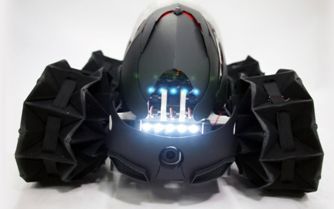
SNUMAX: Multi-functional Soft Robot (Image Courtesy: youtube)
SNUMAX is a multi-functional soft robot developed jointly by three bodies- Biorobotics Laboratory, School of Mechanical & Aerospace Engineering, and Seoul National University. The robot had got the first prize at the first ever RoboSoft Grand Challenge. It has transformable origami wheels that can change its size and shape depending upon the situation. The wheels shrink while moving through a narrow passageway and grow bigger while climbing stairs or going through rough surfaces.
It also contains a soft manipulator in the form of a polymer based continuum body enabling highly flexible and safe movements. Besides, there is an adaptive gripper that works through adaptive positioning mechanism with specially designed friction pad allowing easy gripping of arbitrary objects.
Conclusion
These are just some of the advancements that have been made till now in the field of soft robotics. Since the concept is relatively new as compared to the conventional hard robotics, we are yet to witness the full potential of the soft robots. It is believed in the years to come, soft robotics will no longer be restricted as a sub-branch; rather it would define robotics itself.
However, this doesn’t necessarily degrade the current position of hard robotics. Many argue that both hard and soft robots could co-exist depending upon the applications. For example, factories still need hard and robust robots to work with heavy machinery but when it comes to rescue operations, we need something more soft and flexible to interact with humans.
The pace with which things are processing the day is not far when we would have the robots sensible enough to retract or change their shape in advance when they are about to hit a human before causing any possible havoc.
You may read our Blog and Article section for more topics on electronics engineering, industry, and technology.
Filed Under: Applications, Robotics, Tech Articles
Questions related to this article?
👉Ask and discuss on EDAboard.com and Electro-Tech-Online.com forums.
Tell Us What You Think!!
You must be logged in to post a comment.