Microcontrollers are the workhorse behind most embedded systems. They serve as a compact integrated circuit (IC) designed to govern a specific operation in an embedded system. The programmable firmware used in these tiny computers is ideal for and fits well into several applications. Microcontrollers are neither too specific, like application-specific integrated circuits (ASICs), nor too generic like field programmable gate arrays (FPGAs).
Since its inception in the ’70s, microcontroller technology has evolved significantly. With recent developments in the industrial internet of things (IIoT) and smart electronics, microcontrollers are now more essential than ever.
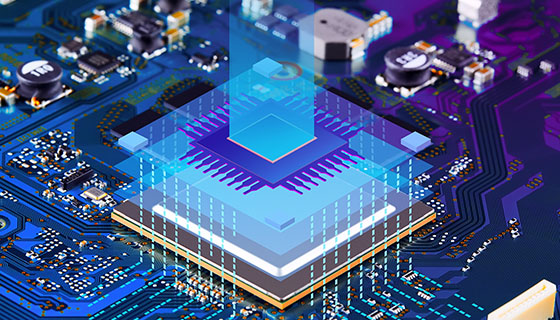
This decade is expected to set milestones in several tech sectors, including IIoT, artificial intelligence (AI), machine learning (ML), smart devices, and electric vehicles (EVs). These industries will have a generational impact on integrated circuit (IC) technology.
For microcontrollers, IC technology has always been focused on incorporating more advanced transistors into smaller spaces. Chip manufacturers are also now committed to adapting microcontroller technology to specific verticals.
Let’s review the trends to expect in microcontrollers for the year ahead.
Low-power design
Microcontrollers are increasingly empowering devices, including home and work automation systems, wireless sensor networks, IoT, smart wearables and devices, and more.
Most embedded systems rely on batteries for the power supply. They also rely on the internet and a local hub or remote server to exchange data wirelessly. The most common wireless solutions integrated into such products are Bluetooth, Wi-Fi, or Zigbee. Power over Ethernet (PoE) is an option for networked devices but is rarely feasible.
IC manufacturers are continually working toward lower power designs, which are necessary for success. Today, low-power IC designs are accompanied by developments in low-power wireless solutions.
Advanced microcontrollers are expected to intermittently exchange critical data over the internet between long sleep durations (without fail) and have batteries that serve for months, if not years.
There are several methods that IC manufacturers apply to cut down the power consumption of microcontrollers. Examples include lowering clock frequency, clock gating, dynamic scaling, and individual peripheral control.
Along with low power, a smaller form factor is also a must for modern microcontrollers. This is particularly true for consumer electronics, where lighter and smaller devices are trending.
Microcontrollers to empower Industrial 4.0
Industrial microcontrollers are reliable chips designed for precision. They’re typically responsible for controlling industrial robots, machine tools, and automation tasks.
A new trend in industrial automation is the use of AI and ML to improve the efficiency and productivity of industrial robots. AI and ML are used to extract valuable insights from sensor networks. That is one reason most industrial microcontrollers are expected to have on-chip or on-board neural processing units. These units integrate AI and deep learning into control systems and automation applications.
Industry 4.0 will include and connect microcontroller technology, IoT, AI, and ML for automation and efficiency.
Network security
IoT has drastically changed the way microcontrollers operate in many industries. As a result, microcontrollers are no longer simply miniature computers focused on a specific task but are also networked devices expected to connect to the internet and operate on low data bandwidths. Often the firmware in these devices is updated “over the air” (OTA).
However, whenever a device connects to the internet, there’s also a heightened security risk of data breaches or attacks. Microcontrollers are not full-fledged computers with sophisticated cyber-security software. So, these tiny processors are more prone to hacking and cyber-attacks.
To combat such risks, network and embedded system engineers have innovated microcontroller-specific technologies to secure data communication over IoT devices. One reliable solution has been the use of serial communication protocols.
Serial communication secures the lowest risk of a successful cyber-attack. Whether synchronous or asynchronous, serial interfaces operate within exclusive parameters between two devices. Even if a link is hacked, detecting and decoding a serial protocol is extremely difficult.
Microcontrollers now extensively rely on encrypted communication via TLS and SSL to communicate over the internet. The hardware-based authentication and secure boot offer security that’s typically employed in OTA updates. The hardware-based security measures, encryption protocols, and serial interfaces will only increase in microcontroller-based applications.
Automotive electronics
Today’s vehicles are not just going electric but also electronic. The use of embedded electronics in the automotive industry has grown substantially in the past few years. Many electronic features, once unique selling points of premium cars, trucks, and SUVs, are now integrated as default in most models.
In modern vehicles, microcontrollers are expected to handle the electrical control unit operations, control fail-safe systems, and automotive fault-tolerant systems (that alert drivers of issues). There are also advanced and unique features in development that rely on microcontrollers, including advanced driver-assistance systems, infotainment systems, automatic climate control, parking sensors, and even autonomous driving.
As automobiles become more electronic, expect increased reliance on microcontrollers.
Healthcare
Biomedical devices have been a vital part of the healthcare industry. Microcontrollers are intelligent computers that often operate these devices.
In 2023 and beyond, biomedical equipment will be integrated with internet-based healthcare services and cloud-based AI. Microcontrollers will be expected to recognize vital healthcare data and share it with smart servers for analytics, remote monitoring, and emergency alerts.
Aside from patient monitoring and diagnosis, robotic surgery will also use microcontrollers.
Conclusion
In 2023 and beyond, we can expect microcontroller technology to grow to meet vertical-specific demands. IIot, AI, and ML will be the on-chip or on-board features enabling advancements in computing and automation.
The microcontrollers of the future will be network-ready, secure, and smart chips that regularly update and exchange data. The days of isolation and one-time programming for microcontrollers are long gone.
You may also like:


Filed Under: Microcontrollers, PIC Microcontroller, Tech Articles
Questions related to this article?
👉Ask and discuss on Electro-Tech-Online.com and EDAboard.com forums.
Tell Us What You Think!!
You must be logged in to post a comment.