A DC power supply is used in almost all of devices where a regulated voltage is required. A DC converter implements the process of DC conversion.
There are two types of DC converters:
- Buck converter- Steps down the input source voltage
- Boost converter – Steps up the input source voltage
Conversion topology
- Linear regulator – Can only be used as a buck converter.
- Switch mode regulator – Can be used as both buck and boost converter.
(Note: For more information on how linear and switching regulators works, please refer to our previous series of Switch Mode Power Supply and linear regulator power supply.)
In this experiment, we will design a buck converter by switch mode chip and practically verify the IC’s performance curve.
Specification
- Step down 12V DC to 3.3V DC
- 2A output current.
Block diagram
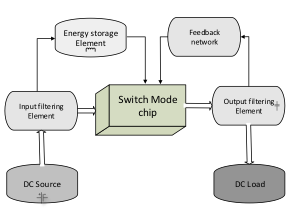
Fig.1 Block Diagram of Buck convertor using Switch Mode chip
Components required
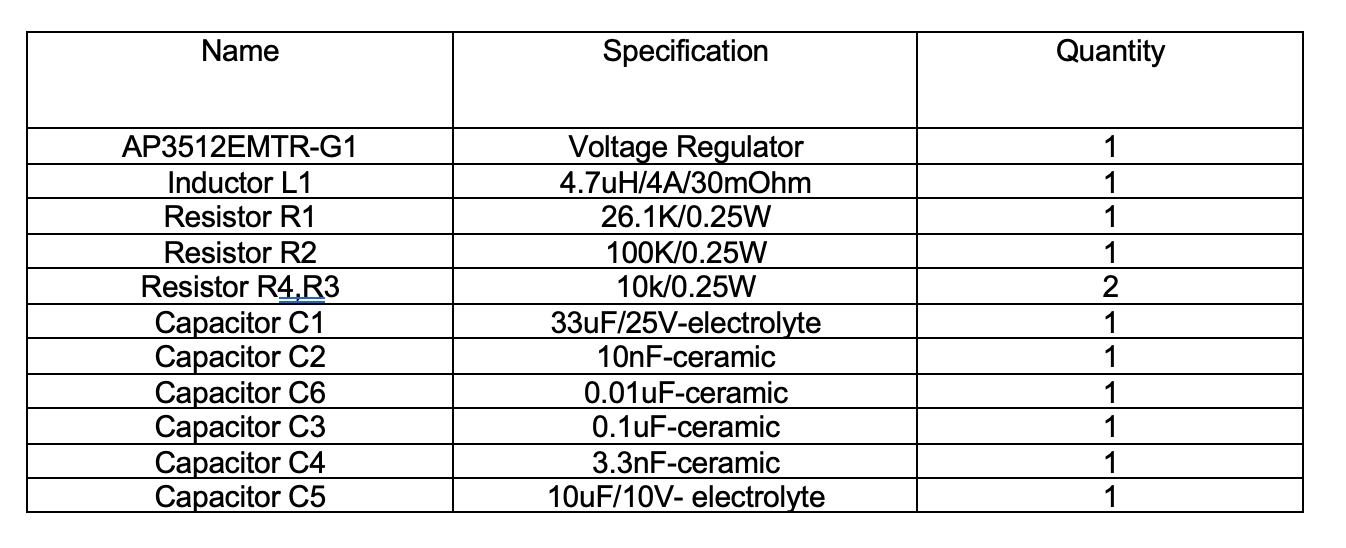
Circuit diagram
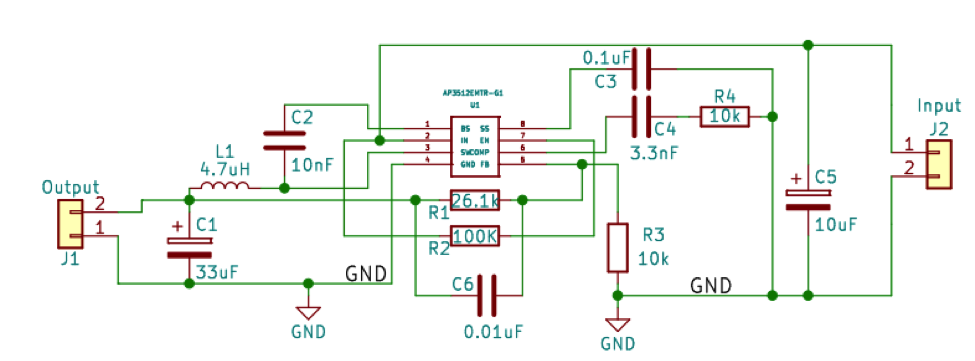
Fig. 2 Circuit Diagram of Buck Convertor
Principle of operation
The AP3512E is a fixed 3.3V buck converter switch mode IC. The input voltage range of this IC is 4.5V to 18V. The output continues current is 2A
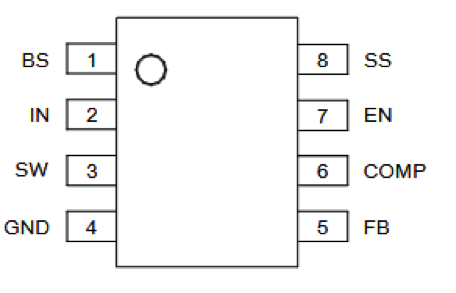
Fig. 3 Pin diagram of AP3512E
Major pin description
EN- It is a digital pin that turns the IC ON and OFF. Drive EN high to turn it ON and low to OFF it. For automatic startup pulled it with a 100k resistor.
SS- Soft start pin is used to control the large inrush current and output overshoots when the circuit is powered ON. SS is generally present in DC to DC converters to make them start in a smooth manner. Connecting a 0.1uF capacitor to ground sets the SS period to 15ms.
FB– Feedback pin is used to set output voltage by using the resistor divider network. When FB pin voltage exceeds 1.1V, the overvoltage protection is triggered, and when it is below 0.3V, the short circuit protection is realized.
The voltage reference of this feedback pin is typically 0.925V, the combination of the reference voltage and resistor divider network will decide the output voltage.
Features
- Overvoltage protection
- Overcurrent protection
- Thermal shutdown
Circuit construction
Setting output voltage
The output voltage can be calculated by the below formula:
Vout = 0.925(1+R1/R3)
Vout = 3.3V (As it is fixed 3.3V regulator)
Let’s take R3 = 10k
Now by putting the values in above equation, we get
R1 = 26.1k approx.
Inductor selection
The wiring diagram consists of an inductor, capacitor, and resistor along with the buck regulator IC. As per the regulator datasheet for an input of 12V and an output of 3.3V, a 4.7uH inductor suits best. The current rating of the inductor should be 1.15-1.25 times more than the required output current.
The maximum output current the IC can provide is – 2A
Minimum current rating of Inductor– 1.15*2 = 2.3A
Soft start and filtering
The capacitor at the input and output helps in filtering the input source, and a 0.1uF capacitor sets the SS period. A feedback capacitor C6 helps stabilize the output voltage at high loads.
(Note: To get a detailed idea about the working of a boost converter please refers to our previous series on SMPS.)
How the circuit works
The regulator in the wiring circuit consists of external components, which are an inductor, resistor, and capacitor. Internally it consists of a transistor, which acts like a switch.
An inductor is used to store the energy in the form of a magnetic field. So, here the inductor acts as an energy-storing element. When the circuit is powered up with a 12V input source the regulator starts switching ON and OFF with a frequency of 500 kHz
During the ON period, the inductor charges up and provides a regulated voltage at the output. During the OFF period, the inductor and output capacitor both maintain the regulated output by releasing their stored energy which they store in the ON state. The resistor divider network makes the out voltage fixed at 3.3V.
Thermal management
The switching regulator is known for its high efficiency and low power dissipation but as we know this nature is not ideal.
Issue and its rectification
So, we tried a ceramic capacitor in parallel with the feedback pin and the output terminal as seen in the schematic (C6 capacitor). This works well in our design, and the output voltage stabilizes. This capacitor is known as a feedforward capacitor, which adds lead compensation to the feedback loop and increases the loop stability
Practical observation
Vin = 12V, Cooling system = Without heatsink and fan
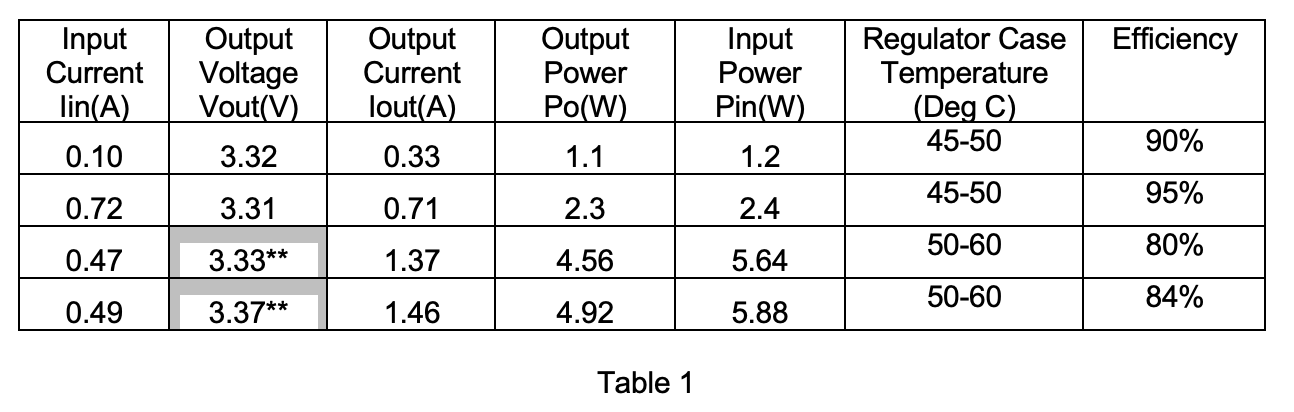 **We can analyze that at a high current the output voltage starts increasing. This is due to the heating effects of the regulator at a high current.
As per its datasheet, the reference voltage increases with a rise in temperature. This will further increase its output voltage. For this, we have used the cooling fan to maintain the regulator temperature and have seen the performance of the regulator at a high current. Below are its readings.
Vin = 12V, Cooling system = 12V DC Fan
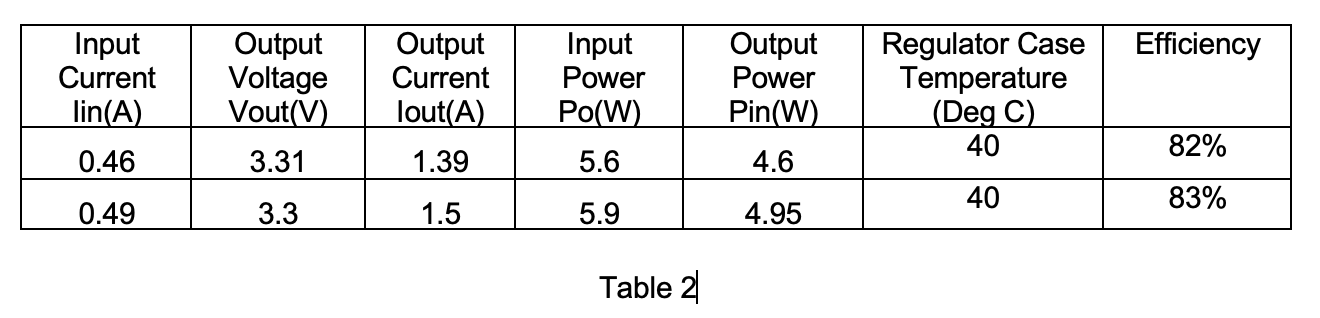
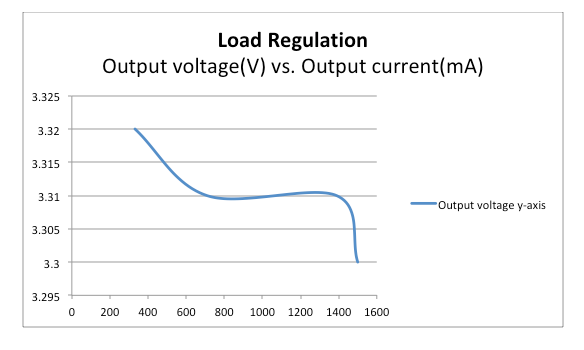
Fig. 4 Load Regulation Curve
Practically observed results vs. datasheet curve
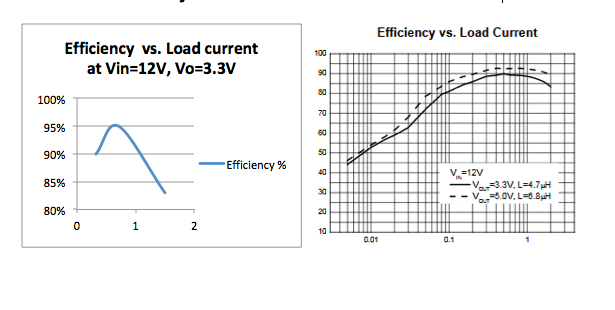
Fig. 5 Image shows practically observed results vs. Datasheet results
IC performance
- Load regulation- Regulated 3.3V even at high load.
- Average efficiency of 88% for current > 200mA
Application
1. In digital circuits which need 3.3V like microcontrollers.
2. Portable Devices
3. Regulated DC supply
4. Used as interface between battery and component in CPU or notebooks where voltage demands are lower than the battery voltage.
Thermal Management
The heating issue is a major problem in a power supply system. For dissipating the extra heat from any circuit several methods can be done, like a heat sink, fan, or thermoelectric cooler. To know if our circuit needs any thermal management or not please refer to our article Power Supply Thermal Management.
Precautions
- A capacitor should be connected between IN pin and ground to keep the DC input voltage regulated.
- The capacitor used in the circuit must be of a higher voltage rating than the input supply voltage. Otherwise, the capacitor starts leaking the current due to the excess voltage at its plates and will burst out.
- For loop stability, a ceramic capacitor must be connected in parallel with the feedback resistor.
- Make sure all the capacitors should be discharged before working on a DC power supply.
- The current rating of the inductor should be 1.15 times greater than the output current.
- Do not give a higher voltage at the input terminal of the IC than its operating input voltage range.
- Do not short the output terminals; this will reverse the current flow in the IC, and the IC will get faulty.
- Also, do not short the input terminals; this will generate a large current in the circuit, and the components in the circuit get faulty.
- Frequency effect
The high frequency increases the switching losses, which decreases the efficiency of the SMPS. But high switching frequency reduces the size of the energy storage element and improves the transient response of the output.
PCB design guidelines
- Keep power traces thick and short.
- Place the input and output capacitor as close as the input and output pin of the IC.
- Minimize the path length of the inductor.
- Keep voltage and switching nodes away from each other.
- Keep all components as close as the IC and try to reduce the size of the PCB
PCB design layout
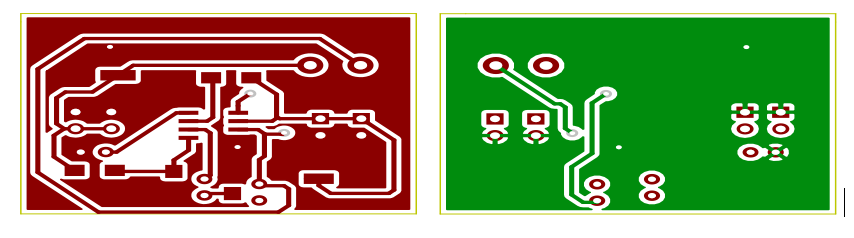
Fig.6 I PCB design layout for buck converter
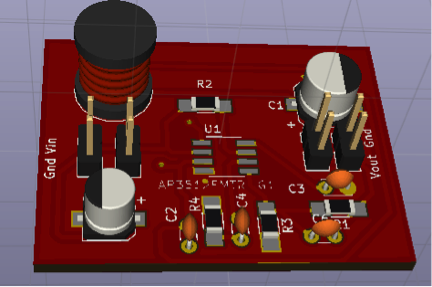
Fig. 7 Animated 3D view of PCB
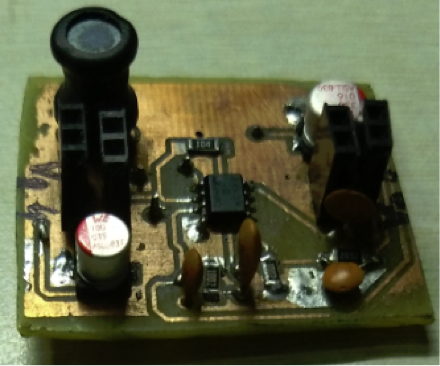
Image. 8 Real view of PCB
You may also like:


Filed Under: Battery Management, Power, Tech Articles, Tutorials
Questions related to this article?
👉Ask and discuss on Electro-Tech-Online.com and EDAboard.com forums.
Tell Us What You Think!!
You must be logged in to post a comment.