Engineers are familiar with the term Switched Mode Power Supply or SMPS. Once it is understood that what SMPS actually is, its countless applications can be easily imagined.
An SMPS is used for converting the electronic power supply efficiently. It is used to supply power to sensitive devices that require stable power supply with high efficiency. Any SMPS has some storage components which store electrical energy to supply to the load device and some switching components which turn on and off at high frequencies charging and discharging the storage components.
The power is supplied to the load device by discharge of the storage component when the switching component is in non-conduction state. The use of switching regulators makes the SMPS different from the linear regulators. The SMPS can be AC to DC, DC to DC, AC to AC or DC to AC supply. In this series on designing SMPS, AC to DC and DC to DC SMPS are dealt.
The switching regulators (like transistors) in SMPS continuously switches between their ON and OFF state. So they spend very less time in high dissipation state which reduces power dissipation of the system. In Linear regulators, all the power is dissipated in the form of heat which reduces the overall efficiency of the system. Due to use of switching components working at high frequency, SMPS can be made to deliver high efficiency up to 95%. SMPS can be used in place of any linear regulator when high efficiency and a small size, light weight power supply is required.
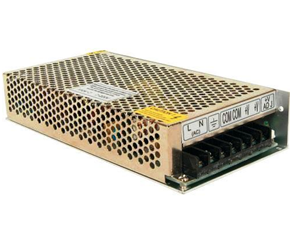
Fig. 1: Typical image of SMPS
In this series, SMPS are designed by using different topologies. For designing SMPS (AC to DC type) they can be categorized as follow –
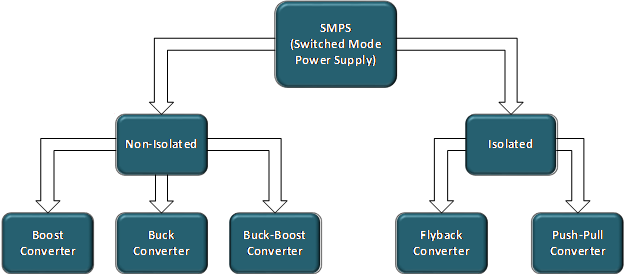
Fig. 2: Image showing Different Types of SMPS
First the SMPS can be broadly categorized in two categories –
1. Non-Isolated SMPS
2. Isolated SMPS
In Non–isolated SMPS the input and output share the same ground or it can be said that there is an electrical connection between the input and output. But in Isolated SMPS the input and output are isolated from each other by a transformer which gives safety from any electric shock by the input power supply (AC).
In Non-Isolated SMPS, the basic topologies of SMPS can be categorized on the basis of Input-Output Voltage as follows –
1.Boost Converter – In this SMPS, the output voltage is always greater than Input voltage.
2.Buck Converter– In this SMPS, the output voltage always less than Input voltage
3.Buck-Boost Converter– In this SMPS, the output voltage can be greater or less than the Input voltage
In Isolated SMPS, there are two topologies of SMPS which are designed in this series. They are as follows –
4. Push-pull Converter
5. Flyback Converter
Now the above mentioned topologies can be further divided into different types as follows –
1. Boost Converter or Buck Converter
In this series of SMPS, a Boost converter and Buck Converter is designed by four ways –
I. Open Loop Boost/Buck Converter- In this Boost Converter, there is no any error detection circuit or any feedback circuit. So the output voltage of this Boost Converter will be unregulated.
II. Closed Loop Boost/Buck Converter – In this Boost Converter there will be an error detection circuit or feedback circuit. This feedback circuit helps in regulating the output voltage.
III. Open Loop Boost/Buck Converter with Adjustable Output –This Boost Converter will have a variable output voltage but without any error detection circuit or feedback circuit. So the output voltage of this Boost Converter will be variable but unregulated.
IV. Closed Loop Boost/Buck Converter with Adjustable Output- This Boost Converter will have a variable output voltage and a feedback circuit. So the output voltage of this Boost Converter will be variable and regulated.
2. Buck-BoostConverter–
There will be two types of Buck-Boost Converters designed in this series –
I. Open Loop Inverting Buck – Boost Converter- In an Inverting Buck-Boost converter, the output voltage can be greater and less that the input voltage. The polarity of the output is opposite to the input voltage that’s why it is called Inverting Buck-Boost converter.
II. Open Loop Inverting Buck – Boost Converter with Adjustable Output
In this Buck-Boost Converter, the output voltage can be varied from the lower voltage (voltage less than input voltage) to the higher voltage level (voltage greater than input voltage).
3. Flyback converter
The Flyback converter is just like a Buck-Boost Converter, the only difference is that in Buck-Boost Converter it uses a single winding of inductor, in the Flyback converter the inductor splits into two windings which form a transformer. This gives the isolation to the output from input. In this series, a Flyback converter is designed which will step down the input voltage and give low voltage at the output.
4. Push–pull converter
An Open Loop Push-Pull converter will be designed which will be a DC to DC SMPS. This converter uses the transformer for converting one DC voltage to another level. A transformer provides the isolation between input and the output. This converter can provide either high voltage or low voltage at the output as compared to input. The number of turns of transformer and duty cycle will decide whether high voltage or low voltage is delivered at the output.
In this series, a Push-Pull converter will be designed which will step up the input voltage and give high voltage at the output
Now let us understand some basic terminologies which will be used in the designing of the SMPS –
On the basis of output current of SMPS, it can have two modes of operation –
1. Continuous Mode
2. Discontinuous mode
1. Continuous Mode-
Usually in SMPS circuit there is an inductor at the input which decides the input current. In continuous mode, the current in the inductor is continuous in the entire cycle of the switching period. So a regulated voltage is obtained at the output in continuous mode. In continuous mode, there is some critical value of output current below which the inductor current is zero for a part of switching cycle then the system is said to be in discontinuous mode. So for the operation of continuous mode, the output is always greater than or equivalent to the critical current value.
Below is the waveform which shows the inductor current in continuous mode.
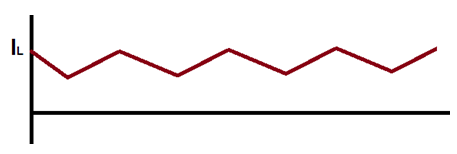
Fig. 3: Graph showing Current Variation in Continuous Conduction Mode of SMPS
2. Discontinuous mode-
In this mode, the current in the inductor is pulsating and it becomes zero for a part of switching time. The current in inductor starts with zero and reaches to peak current then again it returns to zero after completion of one switching cycle. So in this mode, the output voltage is not regulated. So, discontinuous mode needs an error detection block which regulates the output voltage.
Below is the waveform which shows the inductor current in discontinuous mode –
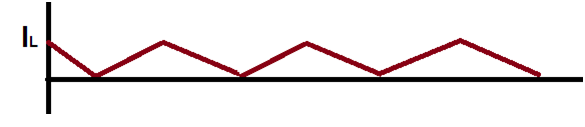
Fig. 4: Graph showing Current Variation in Discontinuous Conduction Mode of SMPS
In this series, each circuit will be designed in both CCM and DCM Modes and there will be the standard eqautions of CCM/DCM used for calcuting the components values.
An SMPS has several advantages over Linear Regulators. Some of the main advantages which leverage SMPS over any linear regulator are as follows –
• Small size –
Any SMPS has switching components which work on high frequency. This reduces the size of components required in the circuit design of the SMPS.
• Low cost-
Because small size components are used to make the SMPS circuit, so assembling the circuit is less costly.
• High efficiency up to 95%-
Due to the use of switching regulators, the efficiency of SMPS is usually very high. An SMPS can have output efficiency up to 95%. That means, around 95% of the input power can be delivered to the output load.
• Isolation between input and output-
By using a transformer in place of inductor, the SMPS can provide good isolation. By providing the isolation between the input and output, the output load can be saved from any electrical shock or voltage fluctuation from the input supply.
The use of SMPS is not just limited to computers. They are used with most of the sensitive devices that essentially require stable and efficient power supply. They are used as low loss current source to drive LEDs and LED circuits. They are used in self-powered devices. They are also used as an interface between battery and components in CPU or notebooks where voltage demand is lower or higher than the battery voltage.
So in this series, the following SMPS circuits will be designed –
1. Boost Converters –
a) Open Loop Boost Converter
b) Closed Loop Boost Converter
c) Open Loop Boost Converter with Adjustable Output
d) Closed Loop Boost Converter with Adjustable Output
2. Buck Converters –
a) Open Loop Buck Converter
b) Closed Loop Buck Converter
c) Open Loop Buck Converter with Adjustable Output
d) Closed Loop Buck Converter with Adjustable Output
3. Buck-Boost Converters
a) Open Loop Inverting Buck – Boost Converter
b) Open Loop Inverting Buck – Boost Converter with Adjustable Output
4. Flyback Converter
5. Push-Pull Converter
You may also like:


Filed Under: Power, Tutorials
Questions related to this article?
👉Ask and discuss on Electro-Tech-Online.com and EDAboard.com forums.
Tell Us What You Think!!
You must be logged in to post a comment.