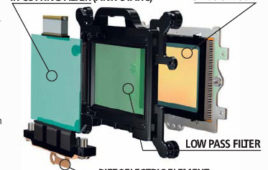
Advent of CMOS technology in eighties led to the phenomenal growth in semiconductor industry. Transistors have become smaller, faster, consume less power, and are cheaper to manufacture. It is CMOS technology which has enabled very high integration on the chips leading to modern high performance, miniaturized integrated circuits. Apart from the valuable contribution in miniaturization of integrated circuits, CMOS technology found applications in sensing applications. CMOS technology has been adopted to design sensors, especially in the field of imaging. Due to the wide usage of CMOS based image sensors, CMOS sensors are often considered to be a synonym of CMOS based image sensors and have emerged as a competitor to CCD based image sensors.
MicroPython – SPI Protocol in ESP8266 and ESP32
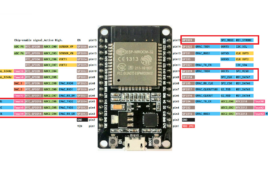
SPI and I2C are the common serial communication protocols used by sensors for communicating with microcontrollers and microcomputers. Both protocols are master-slave protocols. The sensors often take the part of a slave device within an embedded ecosystem. Most of the time, a sensor only requires sending data to the microcontroller/microcomputer. This remains true even if…
How to design a digital compass using Arduino and an HMC5883L magnetometer
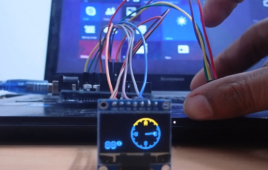
Digital compasses are electronic devices that use sensors to determine the magnetic field, displaying the navigational direction numerically. These types of compasses typically use a magnetometer sensor to measure the strength of the magnetic field to detect the direction. One low-cost, three-axis digital magnetometer is the HMC5883L. It measures the value of the magnetic field…
How to read analog signals in Raspberry Pi using ADS1015/ADS1115
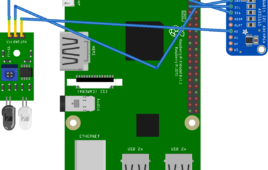
Raspberry Pi is the most popular single-board computer. As an embedded microcomputer, data acquisition is almost essential in Raspberry Pi. Though Pi has several GPIO (General Purpose Input/Output) pins, it does not have any built-in or onboard analog-to-digital converter. Therefore, Pi on its own cannot sample data from analog sensors. In embedded applications, analog sensors…
Arduino MFRC522 RC522 RFID reader interfacing & access control
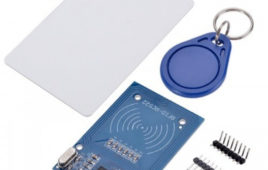
RFID is a popular tagging and identification technology. Radio frequency identification involves one RFID tag and the second RFID reader. RFID tags and labels are low-cost and easily available. Compared to barcode tracking systems, RFID solutions have several advantages. One of the apparent advantages of RFID over barcodes is that it does not require a…
How to use MPU6050 6-axis (gyro + accelerometer) MEMS motion tracking sensor with Arduino
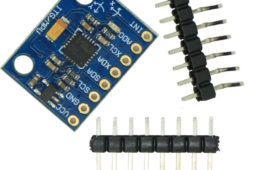
Motion tracking sensors are used in applications like robotics, gesture recognition, vehicle stabilization, position control in drones/quadcopters, pointing devices, game controllers, and fitness tracking devices. One of the popular motion tracking sensors is MPU6050. It is a six-axis MEMS motion tracking sensor that includes a MEMS accelerometer and a MEMS gyroscope. The sensor also has…
Raspberry Pi-based digital door peekhole
A peephole, spyhole, or peekhole is a small opening through the door that allows viewing from inside to outside. Such door holes allow seeing outside the door without opening it. Usually, these door holes have a fisheye lens to have a wider look of the outside. In this project, we have developed a digital version…
Arduino-based electronic leveling device
Have you ever struggled to fix nails on a wall perfectly parallel to the floor or ceiling? In this project, we have modeled an electronic-level device useful in placing anything perfectly parallel. This device is prototyped on the popular microcontroller board – the Arduino. It uses very few components to build, only an accelerometer sensor…
How to use ILI9486 driver 3.5″ TFT LCD touch screen with Arduino
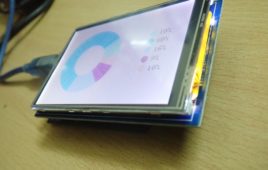
In this project, we will design a simple application using a 3.5-inch TFT LCD that displays different kinds of graphics and text messages with Arduino. TFT LCDs are the most popular color displays – the displays in smartphones, tablets, and laptops are actually the TFT LCDs only. There are TFT LCD shields available for Arduino…
Arduino-based heartbeat monitor with graphical heartbeat display
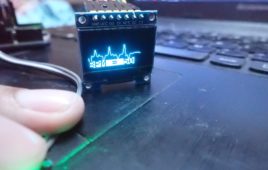
The measurement of pulse rate or heartbeat is a very common medical procedure. Quite often, the patient kept under observation is essentially monitored via their pulse/heartbeat rate. Pulse rate varies from person to person. The pulse is lower when we are resting because at that time, the body does not need much oxygen, and the…
What are the different types of light sensors?

Light sensors or photosensors, which are designed to measure light intensity, are one of the most commonly used sensors in electronic applications. Light intensity is one of the seven base physical quantities. The measurement of light intensity is useful in many consumer, industrial, and security applications. What is a light sensor? A light sensor is…
An introduction to ultrasonic sensors
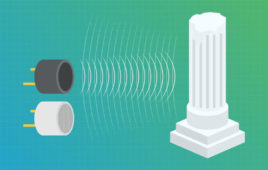
Ultrasonic sensors have been a popular method for distance measurement and object detection for many years. Their basic operating principle works by measuring the amount of time it takes for their emitted ultrasonic pulse of sound to bounce off an object and return, hence the name ultrasonic sensor. With the market for autonomous robots, vehicles,…
Designing an Arduino-based EMG monitor
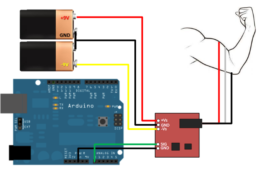
Electromyography (EMG) is a medical procedure that evaluates the health conditions of muscles and nerve cells. These cells transmit electrical signals that cause muscles to contract or relax. EMG is used to read these signals and plot them as numbers or graphs. Typically, EMG is performed by doctors as one part of a diagnostic tool…
What are the different types of temperature sensors and their applications?

Temperature is one of the most commonly measured quantities of a device or the conditions surrounding it — and particularly for electronic components. This is because electronic devices and circuitry generate heat and require some type of thermal management. There are several types of temperature sensors that work well for such applications and that offer…
What are the main types of proximity sensors?

Proximity sensors — often called, proximity switches — detect the presence of nearby objects without making physical contact with them. These objects are called targets. There are several types of proximity sensors, including those used to detect metallic or non-metallic objects. Others are used to detect a specific object. These sensors also rely on different working…
What are level sensors?

On 28th March 1979, at Three Mile Island nuclear power plant in USA, part of the core melted in the # 2 reactor. The TMI-2 reactor was destroyed. The cause of the accident was the little malfunction in the secondary cooling circuit which allowed temperature in the primary coolant to rise. This caused the reactor to shut down automatically. This situation developed because the level controls turned off the coolant to the reactor when they detected presence of cooling water near the top of the tank. The water at the top was not because of the tank got completely filled, it was because the water was too little in the tank that it got boiled and swelled up to the top of the tank.
Arduino-based fall/collision detection alarm using KY-031 knock sensor

Detecting the physical conditions of a robot is always useful in robotic applications. Particularly if the robot is a rover and is designed to explore different terrains. In such applications, there are instances when the state of the robot has to be detected. It may involve detection of collision or fall, change in orientation of…
How to design an Arduino-based container shipment tracking system
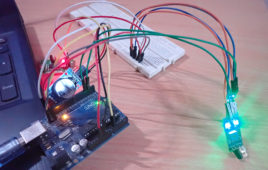
Container shipping is a common transport medium. In fact, 80 percent of international trade in goods is carried by sea. Containers are large and reliable, offering a standard size that makes them portable between ships, trains, and trucks. However, the loss of items transported via containers is not an uncommon problem in the shipping industry.…
How to design a touchless bell push using Arduino
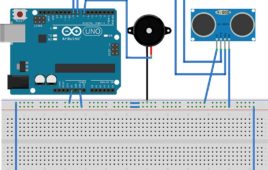
The COVID-19 pandemic has severely affected the lives of millions across the world. It has caused a significant increase in the awareness of health and better hygiene. As a result, the electronics industry has experienced a rapid demand for touchless devices and appliances, such as contactless sanitizer or soap dispensers and automatic doors. For this…
Sensor types used in the IoT
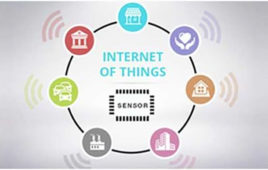
Use of sensors is pretty common in industries and organizations. But, Internet of Things (IoT) has put the usage of sensors at a completely different level. Again, the entire concept of IoT exists and survived because of sensors. What role does sensors play in IoT? Simply answered, they are the medium through which various physical objects are connected through Internet. IoT platforms function and deliver various kinds of intelligence and data using a variety of sensors. The world has gone digital and “smarter” through the interconnection of things via Internet through sensors.