In today’s technological landscape, monitoring gas emissions is critical. From household appliances like air conditioners and electric chimneys to industrial safety systems, gas monitoring plays a vital role. Gas sensors are an essential component of these systems. Small yet highly responsive gas sensors detect and react to the presence of gases, ensuring real-time updates on any changes in concentration levels.
Gas sensors come in a wide range of specifications, varying in sensitivity, the type of gas detected, physical dimensions, and other factors. This Insight focuses on a methane gas sensor, which can also detect gases such as ammonia that may be produced from methane. When a gas interacts with the sensor, it first undergoes ionization and is then adsorbed by the sensing element. This adsorption generates a potential difference, which is transmitted to the processor unit through output pins in the form of an electrical current.
But what exactly is this sensing element? Is it enclosed in a chamber or exposed? How does it receive power, and how is the output extracted? Let’s explore these questions below.
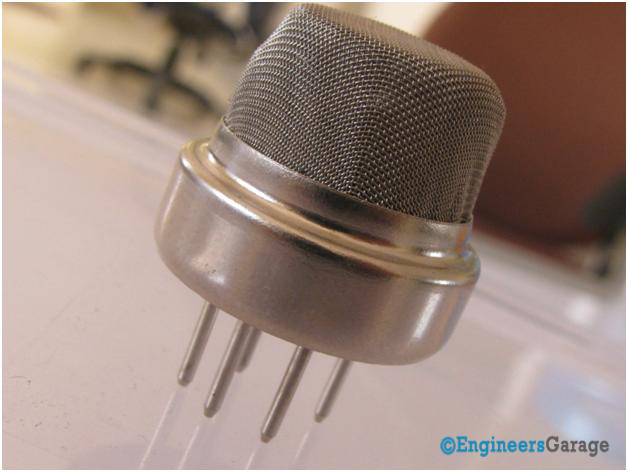
Figure 1. A typical gas sensor.
The gas sensor module consists of a steel exoskeleton that houses the sensing element (Figure 1). This sensing element is supplied with current through connecting leads, known as the heating current. As gases approach the sensing element, they become ionized and are absorbed by it. This process alters the resistance of the sensing element, which in turn affects the output current, allowing the sensor to detect changes in gas concentration.
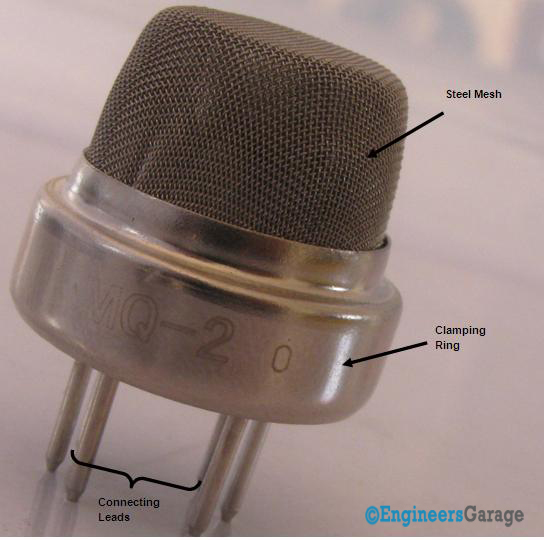
Figure 2. The various parts of a gas sensor.
Figure 2 shows the external components of a standard gas sensor module, including a steel mesh, copper clamping ring, and connecting leads. The top section consists of a stainless steel mesh, which serves multiple functions:
- Filtering out suspended particles, allowing only gaseous elements to enter the sensor.
- Protecting the internal components of the sensor.
- Providing an anti-explosion barrier, ensuring the sensor remains intact under high temperatures and gas pressures.
To efficiently perform these functions, the steel mesh is designed with two layers. It’s securely fastened to the rest of the sensor body using a copper-plated clamping ring (Figure 3).
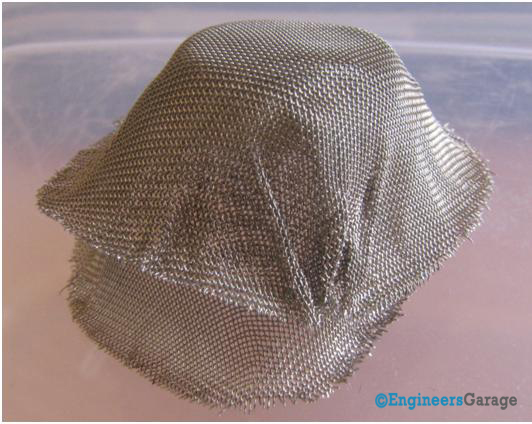
Figure 3. Steel mesh used In a gas sensor.
The connecting leads of the sensor are designed to be thick, ensuring a firm connection to the circuit while also conducting sufficient heat to the internal components. These leads are made of copper with a tin plating for enhanced conductivity and durability.
- Four of the six leads (A, B, C, D) are used for signal retrieval, transmitting data from the sensing element.
- Two leads (1, 2) are dedicated to heating the sensing element, ensuring optimal functionality.
The pins are mounted on a Bakelite base, which acts as a good insulator and provides a secure grip for the sensor’s connecting leads.
Internal features
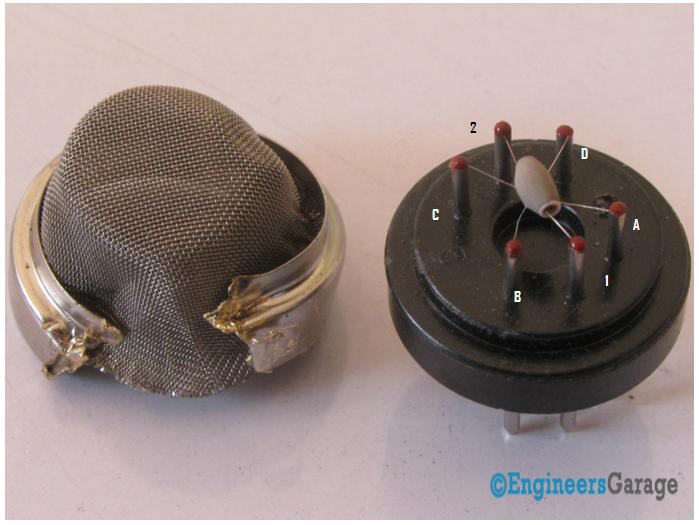
Figure 4. The inside view of a gas sensor after the steel mesh is removed.
The top cover of the gas sensor has been removed to reveal its internal components, including the sensing element and connection wiring.
- The sensing element is positioned at the center of the structure, playing a crucial role in detecting gases.
- The hexapod structure consists of the sensing element and six connecting legs, which extend beyond the Bakelite base to facilitate electrical connections.
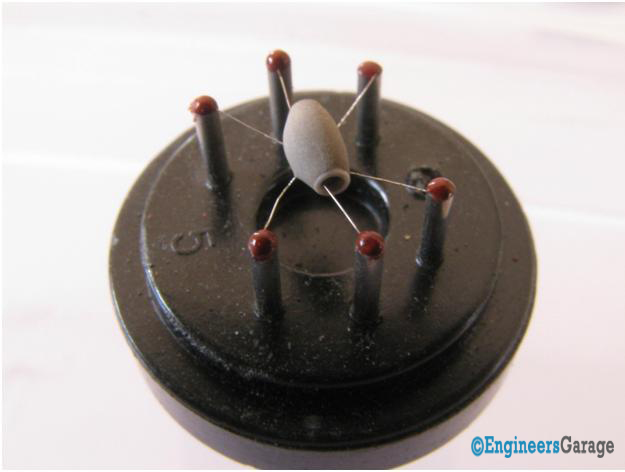
Figure 5. The hexapod structure inside a gas sensor.
Figure 4 illustrates the hollow sensing element, which is constructed from an aluminum oxide-based ceramic and coated with tin oxide.
- The ceramic substrate enhances heating efficiency, ensuring stable operation.
- The tin oxide coating is sensitive to methane and its byproducts, making it ideal for gas detection.
The heating leads are connected via nickel-chromium wires, a well-known conductive alloy, while the output signal leads use platinum wires to detect minor current variations.
- Platinum wires are attached to the body of the sensing element to measure resistance changes.
- Nickel-chromium wires pass through the hollow core, providing controlled heating for gas ionization and adsorption.
Ceramic sensing element
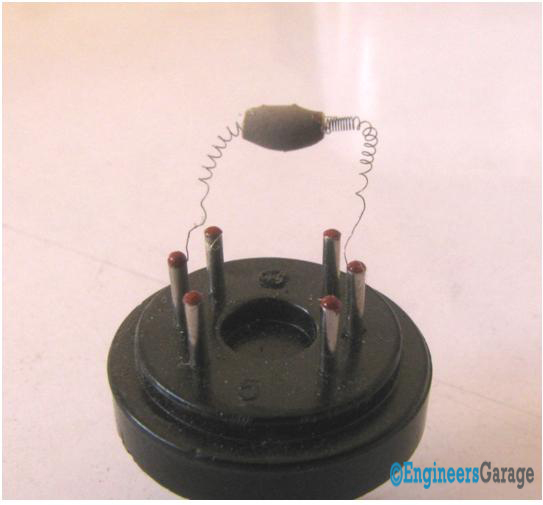
Figure 6. The ceramic sensing element that’s inside a gas sensor.
While other wires are attached to the outer body of the sensing element, the nickel-chromium wires are positioned inside the element in a spring-like shape.
Figure 5 illustrates the coiled section of the nickel-chromium wire, which is carefully placed within the hollow ceramic structure. This design ensures efficient and uniform heating of the sensing element, allowing for consistent ionization and adsorption of target gases. By maintaining an optimal operating temperature, the sensor enhances its sensitivity and ensures accurate detection of methane and its byproducts.
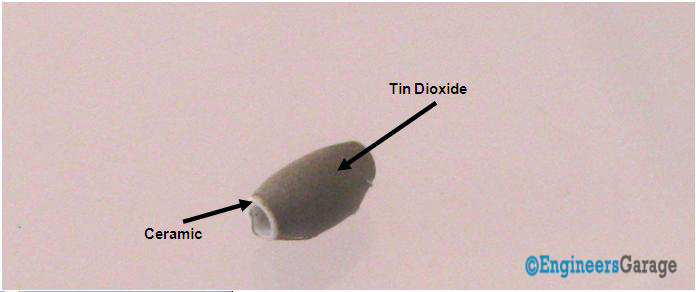
Figure 7. A closer look at the ceramic element.
Figure 6 shows the ceramic structure coated with tin dioxide with strong adsorption properties. Each gas to be monitored has a specific ionization temperature, and the sensor’s role is to maintain the optimal temperature for ionization to occur.
The nickel-chromium wire supplies a heating current to the ceramic region of the sensing element, ensuring it reaches the required temperature. The heat radiates into the surrounding area, allowing gas molecules to interact with the element and become ionized. Once ionized, the gas molecules are adsorbed by the tin dioxide layer (Figure 7).
This adsorption alters the resistance of the tin dioxide, leading to a change in the current passing through the sensing element. The resulting variation in current is transmitted through the output, which leads to the control unit, which processes the sensor’s readings.
Filed Under: Insight
Questions related to this article?
👉Ask and discuss on Electro-Tech-Online.com and EDAboard.com forums.
Tell Us What You Think!!
You must be logged in to post a comment.