Engineers Garage

  • Electronic Projects & Tutorials
    • Electronic Projects
      • Arduino Projects
      • AVR
      • Raspberry pi
      • ESP8266
      • BeagleBone
      • 8051 Microcontroller
      • ARM
      • PIC Microcontroller
      • STM32
    • Tutorials
      • Audio Electronics
      • Battery Management
      • Brainwave
      • Electric Vehicles
      • EMI/EMC/RFI
      • Hardware Filters
      • IoT tutorials
      • Power Tutorials
      • Python
      • Sensors
      • USB
      • VHDL
    • Circuit Design
    • Project Videos
    • Components
  • Articles
    • Tech Articles
    • Insight
    • Invention Stories
    • How to
    • What Is
  • News
    • Electronic Product News
    • Business News
    • Company/Start-up News
    • DIY Reviews
    • Guest Post
  • Forums
    • EDABoard.com
    • Electro-Tech-Online
    • EG Forum Archive
  • DigiKey Store
    • Cables, Wires
    • Connectors, Interconnect
    • Discrete
    • Electromechanical
    • Embedded Computers
    • Enclosures, Hardware, Office
    • Integrated Circuits (ICs)
    • Isolators
    • LED/Optoelectronics
    • Passive
    • Power, Circuit Protection
    • Programmers
    • RF, Wireless
    • Semiconductors
    • Sensors, Transducers
    • Test Products
    • Tools
  • Learn
    • eBooks/Tech Tips
    • Design Guides
    • Learning Center
    • Tech Toolboxes
    • Webinars & Digital Events
  • Resources
    • Digital Issues
    • EE Training Days
    • LEAP Awards
    • Podcasts
    • Webinars / Digital Events
    • White Papers
    • Engineering Diversity & Inclusion
    • DesignFast
  • Guest Post Guidelines
  • Advertise
  • Subscribe

Insight: The internal working of a remote control

By Ashutosh Bhatt February 11, 2013

The Oxford Dictionary defines a remote control as a device that can take “control of a machine or apparatus from a distance by means of radio or infrared signals.”  

These devices made a massive impact on the television industry. Today, several devices use remote controls, from household fans and air-conditioners to gaming consoles, garage doors, and vehicle entertainment systems. It’s even possible to program a smartphone for use as a remote. 

Although these devices are usually small, wireless handheld objects with an array of buttons offering unique features, each remote typically performs a similar task: to control the outputs of an electronic device from a distance.

In this article, we’ll break down the internal components of a Sony RMGA020 LCD TV remote used for the 32-inch KL television series. Interestingly, Sony calls the device a “Remote Commander,” which is a testament to its many features.
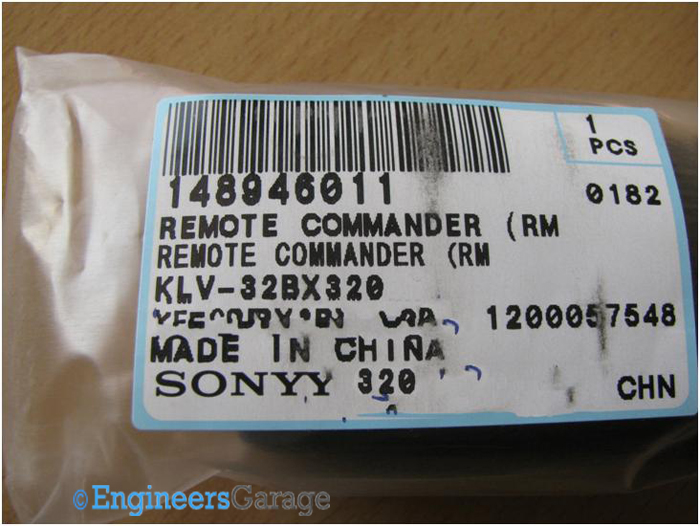
Image of Product Tag of Remote Control Device

The product tag of a Sony remote control device.

This Sony remote is equipped with push buttons that control several features (from volume to channel changing and more) for one of the company’s LED televisions. One might think the remote-control houses complex circuitry based on the number of buttons and options available.
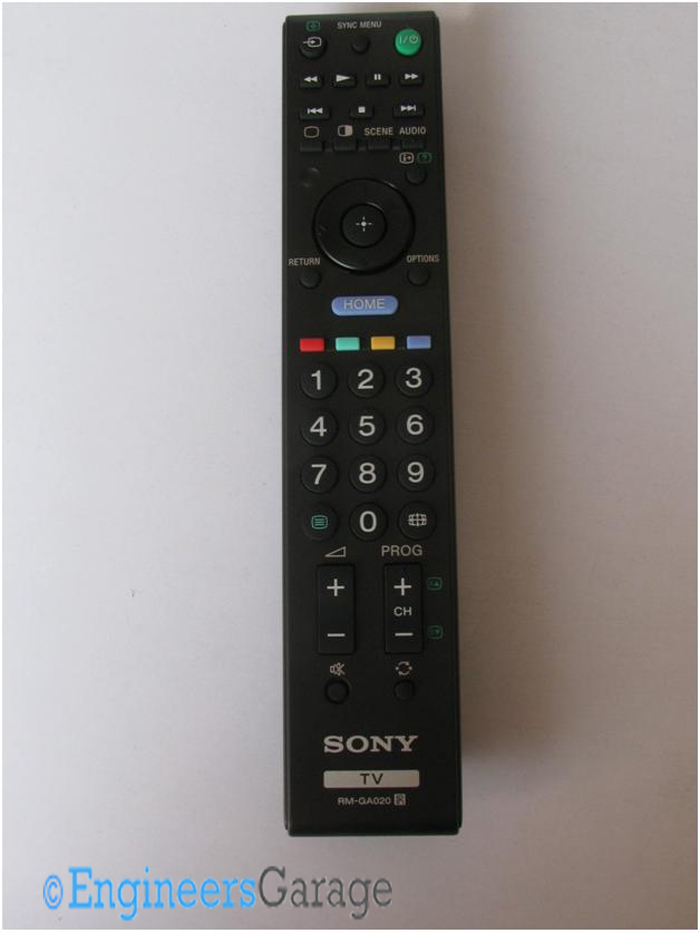
Sony RMGA020 LCD TV Remote Control

A typical Sony remote control.

Shape and Structure of Outer Body of Remote

The shape and structure of the remote for ease of use.

The casing and battery slot
Smart manufacturers design remote controls to be lightweight with gentle corners so they can be held with ease. The buttons are typically made of rubber and are responsive to light pressure without the risk of damage. The batteries are encased in an easy-to-access slot.
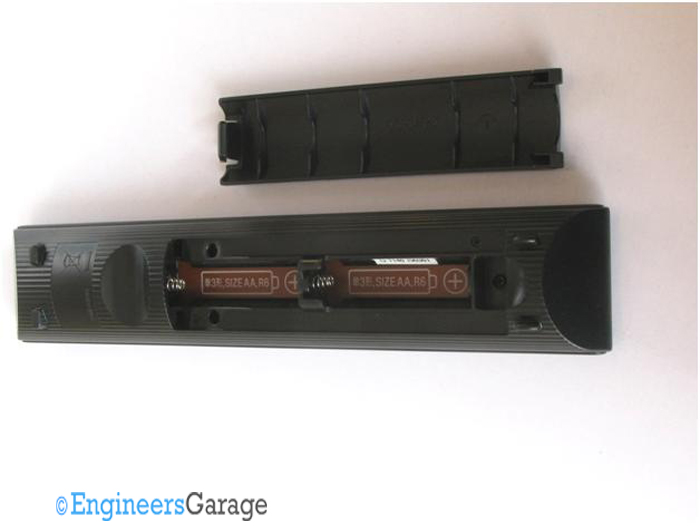
Battery Casing of Remote

The battery casing of the remote control.

Overall, the casing should be comfortable for almost anyone’s hand yet durable enough for daily use without breaking easily.
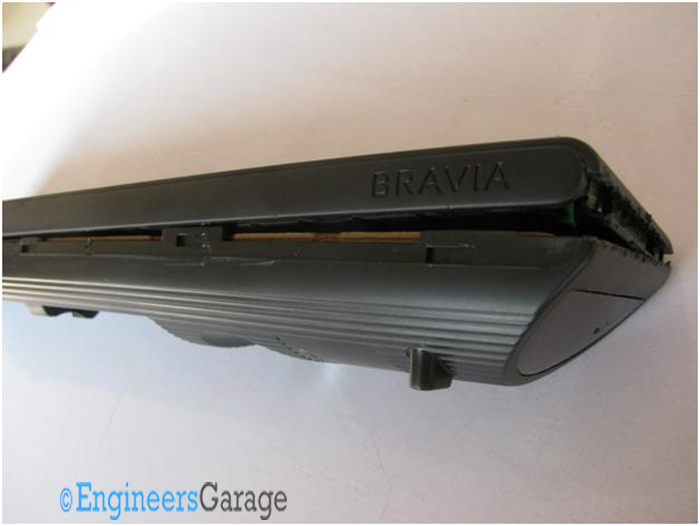
Layers of Remote Control Body

The layers of the remote control’s body.

The Sony remote control has a screw-less exoskeleton, which is easy to disassemble, revealing its internal structure. The upper and lower layers of the plastic body are fastened together by mechanical fixtures placed inside each one (invisible from the outside).
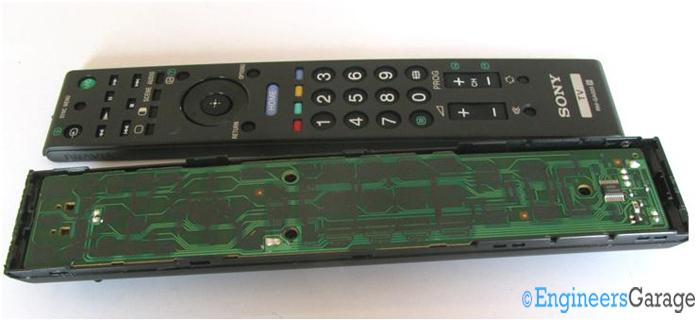
PCB and IC of Remote Control

The internal PCB and IC of the remote control.

The PCB and IC
Once separated, the layers reveal a rectangular printed circuit board (PCB) that covers most of the area under the hood. 

The PCB is the multi-tasking electronic assembly beneath the remote’s rubber buttons. It’s held to the lower layer of plastic using screws (not visible in the above image).
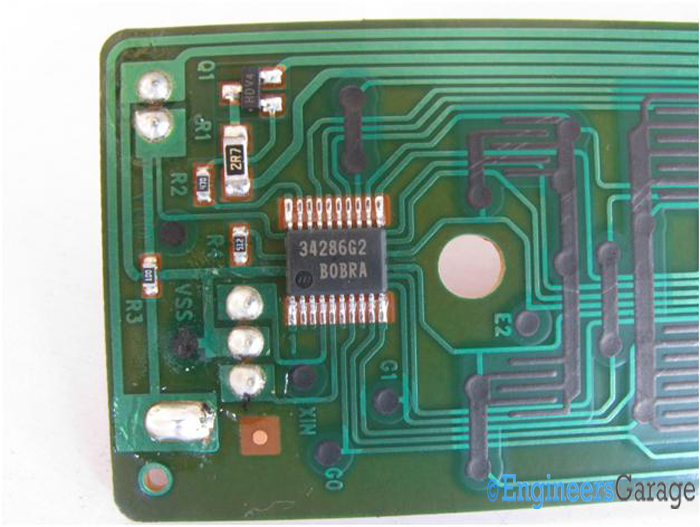
Circuit Arrangement of PCB

The circuit arrangement of the PCB.

The front part of the PCB that lies just below the rubber buttons is a mesh of the connection tracks, with an integrated circuit (IC) at one end. The basic task of the IC is to decode which button has been pressed and generate the corresponding signal.
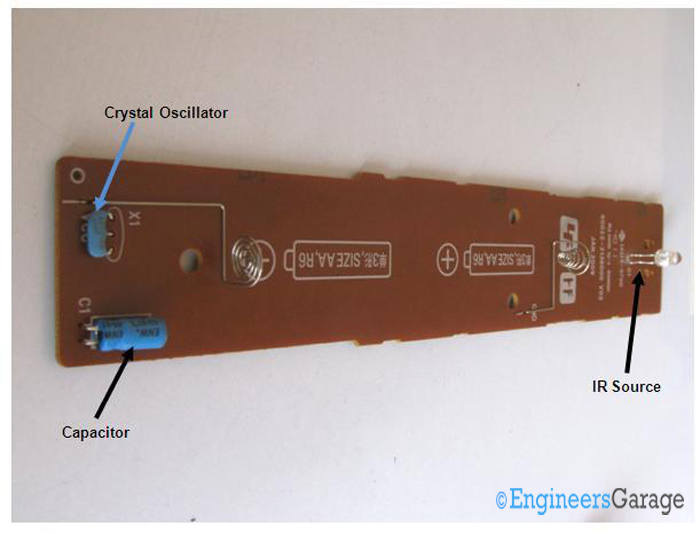
Electronic Arrangement of Reverse Side of PCB

The electronic arrangement of the reverse side of the PCB.

On the reverse side of the PCB, a crystal oscillator and a capacitor can be seen, which facilitate the IC’s work. An infrared source is at the other end of the PCB (near the battery slot). The source is analogous to the output of the remote, which sends the signals generated by the IC. The remote is the transmitter, and the TV is the receiver.

Essentially, the PCB acts as the brain of the remote control. It manages the power requirements and receives the input from the user (via buttons being pressed), converting it into proper code and then transmitting it.


Filed Under: Insight
Tagged With: battery, ir, oscillator, remote control
 

Next Article

← Previous Article
Next Article →

Questions related to this article?
👉Ask and discuss on Electro-Tech-Online.com and EDAboard.com forums.


Tell Us What You Think!! Cancel reply

You must be logged in to post a comment.

EE TECH TOOLBOX

“ee
Tech Toolbox: Internet of Things
Explore practical strategies for minimizing attack surfaces, managing memory efficiently, and securing firmware. Download now to ensure your IoT implementations remain secure, efficient, and future-ready.

EE Learning Center

EE Learning Center
“engineers
EXPAND YOUR KNOWLEDGE AND STAY CONNECTED
Get the latest info on technologies, tools and strategies for EE professionals.

HAVE A QUESTION?

Have a technical question about an article or other engineering questions? Check out our engineering forums EDABoard.com and Electro-Tech-Online.com where you can get those questions asked and answered by your peers!


RSS EDABOARD.com Discussions

  • Reducing "shoot-through" in offline Full Bridge SMPS?
  • High Side current sensing
  • How to simulate power electronics converter in PSpice?
  • Voltage mode pushpull is a nonsense SMPS?
  • Layout IRN reduction in Comparator

RSS Electro-Tech-Online.com Discussions

  • Back to the old BASIC days
  • Parts required for a personal project
  • PIC KIT 3 not able to program dsPIC
  • Failure of polypropylene motor-run capacitors
  • Siemens large industrial PLC parts

Featured – RPi Python Programming (27 Part)

  • RPi Python Programming 21: The SIM900A AT commands
  • RPi Python Programming 22: Calls & SMS using a SIM900A GSM-GPRS modem
  • RPi Python Programming 23: Interfacing a NEO-6MV2 GPS module with Raspberry Pi
  • RPi Python Programming 24: I2C explained
  • RPi Python Programming 25 – Synchronous serial communication in Raspberry Pi using I2C protocol
  • RPi Python Programming 26 – Interfacing ADXL345 accelerometer sensor with Raspberry Pi

Recent Articles

  • What is AWS IoT Core and when should you use it?
  • AC-DC power supply extends voltage range to 800 V DC
  • Infineon’s inductive sensor integrates coil system driver, signal conditioning circuits and DSP
  • Arm Cortex-M23 MCU delivers 87.5 µA/MHz active mode
  • STMicroelectronics releases automotive amplifiers with in-play open-load detection

EE ENGINEERING TRAINING DAYS

engineering

Submit a Guest Post

submit a guest post
Engineers Garage
  • Analog IC TIps
  • Connector Tips
  • Battery Power Tips
  • DesignFast
  • EDABoard Forums
  • EE World Online
  • Electro-Tech-Online Forums
  • EV Engineering
  • Microcontroller Tips
  • Power Electronic Tips
  • Sensor Tips
  • Test and Measurement Tips
  • 5G Technology World
  • Subscribe to our newsletter
  • About Us
  • Contact Us
  • Advertise

Copyright © 2025 WTWH Media LLC. All Rights Reserved. The material on this site may not be reproduced, distributed, transmitted, cached or otherwise used, except with the prior written permission of WTWH Media
Privacy Policy

Search Engineers Garage

  • Electronic Projects & Tutorials
    • Electronic Projects
      • Arduino Projects
      • AVR
      • Raspberry pi
      • ESP8266
      • BeagleBone
      • 8051 Microcontroller
      • ARM
      • PIC Microcontroller
      • STM32
    • Tutorials
      • Audio Electronics
      • Battery Management
      • Brainwave
      • Electric Vehicles
      • EMI/EMC/RFI
      • Hardware Filters
      • IoT tutorials
      • Power Tutorials
      • Python
      • Sensors
      • USB
      • VHDL
    • Circuit Design
    • Project Videos
    • Components
  • Articles
    • Tech Articles
    • Insight
    • Invention Stories
    • How to
    • What Is
  • News
    • Electronic Product News
    • Business News
    • Company/Start-up News
    • DIY Reviews
    • Guest Post
  • Forums
    • EDABoard.com
    • Electro-Tech-Online
    • EG Forum Archive
  • DigiKey Store
    • Cables, Wires
    • Connectors, Interconnect
    • Discrete
    • Electromechanical
    • Embedded Computers
    • Enclosures, Hardware, Office
    • Integrated Circuits (ICs)
    • Isolators
    • LED/Optoelectronics
    • Passive
    • Power, Circuit Protection
    • Programmers
    • RF, Wireless
    • Semiconductors
    • Sensors, Transducers
    • Test Products
    • Tools
  • Learn
    • eBooks/Tech Tips
    • Design Guides
    • Learning Center
    • Tech Toolboxes
    • Webinars & Digital Events
  • Resources
    • Digital Issues
    • EE Training Days
    • LEAP Awards
    • Podcasts
    • Webinars / Digital Events
    • White Papers
    • Engineering Diversity & Inclusion
    • DesignFast
  • Guest Post Guidelines
  • Advertise
  • Subscribe