In 1978, Dr. Amar Bose – sound engineer, MIT professor and founder of Bose Corporation – was flying from USA to Switzerland when he was offered headphones by the airplane staff to listen to music on flight. But, in the constant drone of the airplane engines, and with no way to escape that drone, he could not enjoy the music. In fact, he could barely hear it. He fetched a paper napkin and began scribbling on it with his pen to see if it was possible to design headphones that could remove this noise. The company claims that the mathematical calculations that began in that flight, thousands of feet above the Atlantic Ocean, gave birth to a new era in the science of noise reduction and cancellation. Excited by his early calculations, as soon as Dr Bose returned from his trip to Europe he formed Noise Reduction Technology Group to work on this technology specifically. This, as they say, was history in the making.
On December 14, 1986, another plane – a two-seater private voyager – took off for from a desert in Southern California. It remained in the sky for 9 days 3 minutes and 44 seconds exactly and, on December 23, became the world’s first airplane to fly across the whole world without stopping or refueling even once. Its two record-setting pilots, in order to increase their endurance levels, were wearing prototype headphones that used noise-cancellation. They were developed by none other than Bose’s Noise Reduction Technology Group.
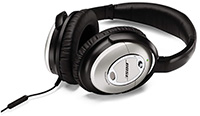
Fig. 1: Image Of Noise Cancelling Headphones(Boss)
The idea that came as a flash to Mr. Bose in an airplane ended up being successfully tested in another flight 8 years later. And so the world saw, in 1989, the first ever commercially available noise-cancelling headphone.
These ten years are the defining moments in the story of noise-cancelling headphones. But as is always the case, the saga began much earlier. A hundred years earlier in fact.
A British mathematical physicist and engineer called Thomson was using two Bell telephones to experiment with noise-cancellation in 1878. He was one of the first persons to conclude that it was possible to cancel sound with sound. A tremendous achievement at a time when wave phenomena weren’t properly understood and electromagnetic waves were yet to be discovered.
But not a single technical realization of sound cancelation came for as many as the next 70 years!
A man who could have made significant contributions to sound engineering was paralyzed by his own government. Paul Lueg, a doctor of philosophy and medicine who also worked as a physicist, submitted in 1933 his patent application describing for the first time the principle of active noise cancellation. Experts have noted that this man had recognized the important aspects of noise reduction and cancellation. Unfortunately, his patents made him run into major controversies with Nazi government. Instead of recognition and wealth, his work brought him lifelong miseries. He could not explore the area more in his later years.
Came along Olson in the 1950s with his ingenious design. Olson was deeply interested in cutting active noise in rooms, ducts and headphones, and he wanted to do it using a feedback control system. Determined to make real his designs that were on paper, he worked hard on them, successfully filing multiple patents, and finally innovating machines that actually worked.
There were limitations. Olson’s systems worked only for a small frequency range. As soon as the noise would go up, his systems would become instable. He was making an ambitious control system at a time when control theory wasn’t yet fully realized. Remember also that the semiconductor technology was in its early stages with the Integrated Circuit yet to be invented in Texas Instruments lab in 1959.
Therefore, similar challenges were faced by other inventors of that time. Imagine having to adjust a knob on your earphone, like the one that regulates a ceiling fan or a radio, every time the noise you are hearing changes – which pretty much happens all the time in our everyday environment. This was the machine of W.Conover in General Electric labs, which required constant manual intervention to adjust the phase and amplitude levels. It was brilliant and one of its kind, but impractical.
Dr. Willard Meeker who developed a working model at about the same time was slightly more successful. He applied his model to earmuffs that had an active attenuation bandwidth of approximately 50-500 Hz, with a maximum attenuation of approximately 20 dB, but no more.
So while a robust theory on noise cancellation was in place and the engineers around the world had begun to take interest in executing them after a long period of lull, a good, stable design remained a hard nut to crack.
Sometimes the world just has to wait. Every idea has its time. It was only in that flight to Zurich in1978 that the time for this idea had come, in the head of the brilliant Dr. Amar Bose.
To be fair, Bose was not the only company to develop this technology. Sennheiser, the renowned audio company based in Germany, was only slightly behind them. They invented their own version of noise-cancelling headphones which were less effective. Good enough for German aircraft pilots though as they sold them to the German armed forces in 1988. Bose too designed and sold prototypes for the military, even as they made noise-reducing earphones available for sales to public in 1989.
It is one thing to imagine a technology that cancels ambient sound in homes or offices. Quite another to actually implement it in the loud, tense and unstable environment of the military aircraft cabins.
It is no wonder that the products became instant hit in the 90’s with the military because it worked so well. Money flowed in their research and development, and the audio devices became equipped with amazing new hi-tech features for men-on-combat. In 1995, these rapidly evolving noise-cancelling headphones made a buzz in the technical world when Bose’s Acoustic Noise Cancelling headset Series II was named “Product of the Year.” The army praised it for reducing fatigue and improving mission effectiveness.
This achievement became the final stamp needed to show that noise-cancellation headphones were here to stay.
Some inventions evolve continuously over time, some others in breakthroughs. The noise-cancelling technology evolved in spurts for over a hundred years until it became a mission statement for Bose NRTG in USA. It is hard to believe how in the short time there after the technology combined with headphones – seemingly simple sound output units – to give us a science-fiction like gadget that would cancel external noise!
Filed Under: Invention Stories
Questions related to this article?
👉Ask and discuss on EDAboard.com and Electro-Tech-Online.com forums.
Tell Us What You Think!!
You must be logged in to post a comment.