Engineers Garage

  • Electronic Projects & Tutorials
    • Electronic Projects
      • Arduino Projects
      • AVR
      • Raspberry pi
      • ESP8266
      • BeagleBone
      • 8051 Microcontroller
      • ARM
      • PIC Microcontroller
      • STM32
    • Tutorials
      • Audio Electronics
      • Battery Management
      • Brainwave
      • Electric Vehicles
      • EMI/EMC/RFI
      • Hardware Filters
      • IoT tutorials
      • Power Tutorials
      • Python
      • Sensors
      • USB
      • VHDL
    • Circuit Design
    • Project Videos
    • Components
  • Articles
    • Tech Articles
    • Insight
    • Invention Stories
    • How to
    • What Is
  • News
    • Electronic Product News
    • Business News
    • Company/Start-up News
    • DIY Reviews
    • Guest Post
  • Forums
    • EDABoard.com
    • Electro-Tech-Online
    • EG Forum Archive
  • DigiKey Store
    • Cables, Wires
    • Connectors, Interconnect
    • Discrete
    • Electromechanical
    • Embedded Computers
    • Enclosures, Hardware, Office
    • Integrated Circuits (ICs)
    • Isolators
    • LED/Optoelectronics
    • Passive
    • Power, Circuit Protection
    • Programmers
    • RF, Wireless
    • Semiconductors
    • Sensors, Transducers
    • Test Products
    • Tools
  • Learn
    • eBooks/Tech Tips
    • Design Guides
    • Learning Center
    • Tech Toolboxes
    • Webinars & Digital Events
  • Resources
    • Digital Issues
    • EE Training Days
    • LEAP Awards
    • Podcasts
    • Webinars / Digital Events
    • White Papers
    • Engineering Diversity & Inclusion
    • DesignFast
  • Guest Post Guidelines
  • Advertise
  • Subscribe

Invention Story of Barcode

By Samidha Verma April 18, 2012


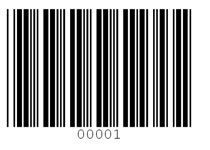
Image Of Barcode
Fig. 1: Image Of Barcode

Though, one of the most useful, barcode is an underrated invention. Barcode comes from near past; they were implemented in the year 1970. Since then, they have made life of shoppers and stores fairly easy and hassle free.
 
It all started when a small food vendor realized how tedious it was to keep a track of his inventory and their prices. In 1948, he decided to find an effective solution. And he got in touch with The Drexel Institute of Technology to work out a feasible answer to the problem that loomed from his head. Bernard Silver from the institute accepted the challenge and started investigating the problem. He began working to find out an automatic solution to keep record of the items sold. Soon Bernard along with some of his students realized that the answer lied in ultraviolet rays, scanner and ink.
 
Norman Joseph Woodland, one of the Silver’s students, was the one to give the idea of using ultraviolet sensitive ink. And the team came up with working prototype only to realize that it was too expensive and unstable for printing patterns. But Woodland was convinced that it was a workable idea. So he gave up his job at the Institute, made use of his stock market profits to concentrate on the barcode solution. And in October, 1949, both Silver and Woodland filed the patent application.
 
Most of its histories state that barcode by Silver and Woodland was symbol of bull’s eye, with various centric circles. Both of them had described the same symbol but the basic symbol was described as straight line patterns similar to linear bar codes like Code 39 and UPC.
 
The symbology comprised dark background with 4 white lines on it. First of the lines was datum line with others fixed according to the first one. Information was coded, decoded as per absence and presence of lines. This permitted 7 different article classifications. However, it was noted by the inventors that if more lines were added, more classifications would be possible. With around 10 lines, 1023 classifications were possible.
 
Unfortunately Silver died in 1962, even before he could see the very first commercial of his invention- Barcode. Neither Woodland nor Silver could make money from the business which turned out to be a gold mine later on. This is because they sold their patent to RCA in year 1952 for a very small amount and this was long before the technology was commercialized. This patent expired in year 1969, around 5 years before barcodes were used in the grocery stores. This was truly an invention that was ahead of the time.
 
National Association of Food Chains (NAFC) called out for the equipment manufacturers who could help in speeding checkout process. And in year 1967, RCA came up with earliest scanning system for the Kroger Store situated in Cincinnati. The barcodes that appeared like bull’s eye were not pre- printed on the goods rather labeled by the store’s employees. The Kroger soon faced problems with the code. So a need of standardized coding was felt to maintain consistency throughout.
 
And by the year 1970, Universal Grocery Products Identification Code (UGPIC) was introduced by Logicon Inc. Monarch Marking and Plessey Telecommunications were the earliest company to endow bardcode equipment for the retail use and industrial use respectively. Eventually UGPIC emerged as U.P.C symbol which is still used in the US. Invented in year 1973, Uniform Product Code is considered to be an invention of George Laurer.
 
One of the earliest UPC scanners manufactured by the NCR Corp. was installed in Marsh Supermarket, Ohio in June, 1974. And in the same month, first product with barcode was also scanned there. And this product was a pack of Wrigley chewing gum. It just happened to be the first product picked by the shopper for checkout and it is still preserved at the Smithsonian Nation Museum of the American History.


History of the Industrial Barcode Uses


The earliest attempt of barcode industrial application was made in late 1950s by American Railroad Association.  And in year 1967, Association implemented optical barcode known as KarTrack from Sylvana. Scanner installation and car labeling started in October 1967. It took around 7 years for most of the fleet to be labeled. For various reasons, this system was unsuccessful and was eventually abandoned in the year 1975. Then in year 1988, Burington Northern started implementing RFID tags for keeping record of the rail cars. Originally this RFID was proposed in 1960 but was its use did not gear up because of the cost associated with it. By 1991, it became compulsory to tag the cars with RFID.
 
Conceivably early industrial barcode use was from system that was developed in the year 1969 by company called Computer Identics. This was done for the General Motors so that automobile axials could be recorded. One event that really led barcodes to enter industrial applications was in September, 1981 when US Defense Department used Code 39 for marketing goods old to military. The system known as LOGMARS is used by the military even today. Soon in 1982, Postal Service US also adopted Barcode POSTNET for automatically sorting out the mails based on the zip code.
 
An idea produced from mind of small food store owner has developed by leaps and bounds today. This invention has surely revolutionized the shopping experience by providing a system that effectively saves time and avoids botheration to the shoppers as well the stores.



Filed Under: Invention Stories
Tagged With: barcode, invention
 

Next Article

← Previous Article
Next Article →

Questions related to this article?
👉Ask and discuss on Electro-Tech-Online.com and EDAboard.com forums.


Tell Us What You Think!! Cancel reply

You must be logged in to post a comment.

EE TECH TOOLBOX

“ee
Tech Toolbox: Internet of Things
Explore practical strategies for minimizing attack surfaces, managing memory efficiently, and securing firmware. Download now to ensure your IoT implementations remain secure, efficient, and future-ready.

EE Learning Center

EE Learning Center
“engineers
EXPAND YOUR KNOWLEDGE AND STAY CONNECTED
Get the latest info on technologies, tools and strategies for EE professionals.

HAVE A QUESTION?

Have a technical question about an article or other engineering questions? Check out our engineering forums EDABoard.com and Electro-Tech-Online.com where you can get those questions asked and answered by your peers!


RSS EDABOARD.com Discussions

  • Reducing "shoot-through" in offline Full Bridge SMPS?
  • High Side current sensing
  • How to simulate power electronics converter in PSpice?
  • Voltage mode pushpull is a nonsense SMPS?
  • Layout IRN reduction in Comparator

RSS Electro-Tech-Online.com Discussions

  • Back to the old BASIC days
  • Parts required for a personal project
  • PIC KIT 3 not able to program dsPIC
  • Failure of polypropylene motor-run capacitors
  • Siemens large industrial PLC parts

Featured – RPi Python Programming (27 Part)

  • RPi Python Programming 21: The SIM900A AT commands
  • RPi Python Programming 22: Calls & SMS using a SIM900A GSM-GPRS modem
  • RPi Python Programming 23: Interfacing a NEO-6MV2 GPS module with Raspberry Pi
  • RPi Python Programming 24: I2C explained
  • RPi Python Programming 25 – Synchronous serial communication in Raspberry Pi using I2C protocol
  • RPi Python Programming 26 – Interfacing ADXL345 accelerometer sensor with Raspberry Pi

Recent Articles

  • What is AWS IoT Core and when should you use it?
  • AC-DC power supply extends voltage range to 800 V DC
  • Infineon’s inductive sensor integrates coil system driver, signal conditioning circuits and DSP
  • Arm Cortex-M23 MCU delivers 87.5 µA/MHz active mode
  • STMicroelectronics releases automotive amplifiers with in-play open-load detection

EE ENGINEERING TRAINING DAYS

engineering

Submit a Guest Post

submit a guest post
Engineers Garage
  • Analog IC TIps
  • Connector Tips
  • Battery Power Tips
  • DesignFast
  • EDABoard Forums
  • EE World Online
  • Electro-Tech-Online Forums
  • EV Engineering
  • Microcontroller Tips
  • Power Electronic Tips
  • Sensor Tips
  • Test and Measurement Tips
  • 5G Technology World
  • Subscribe to our newsletter
  • About Us
  • Contact Us
  • Advertise

Copyright © 2025 WTWH Media LLC. All Rights Reserved. The material on this site may not be reproduced, distributed, transmitted, cached or otherwise used, except with the prior written permission of WTWH Media
Privacy Policy

Search Engineers Garage

  • Electronic Projects & Tutorials
    • Electronic Projects
      • Arduino Projects
      • AVR
      • Raspberry pi
      • ESP8266
      • BeagleBone
      • 8051 Microcontroller
      • ARM
      • PIC Microcontroller
      • STM32
    • Tutorials
      • Audio Electronics
      • Battery Management
      • Brainwave
      • Electric Vehicles
      • EMI/EMC/RFI
      • Hardware Filters
      • IoT tutorials
      • Power Tutorials
      • Python
      • Sensors
      • USB
      • VHDL
    • Circuit Design
    • Project Videos
    • Components
  • Articles
    • Tech Articles
    • Insight
    • Invention Stories
    • How to
    • What Is
  • News
    • Electronic Product News
    • Business News
    • Company/Start-up News
    • DIY Reviews
    • Guest Post
  • Forums
    • EDABoard.com
    • Electro-Tech-Online
    • EG Forum Archive
  • DigiKey Store
    • Cables, Wires
    • Connectors, Interconnect
    • Discrete
    • Electromechanical
    • Embedded Computers
    • Enclosures, Hardware, Office
    • Integrated Circuits (ICs)
    • Isolators
    • LED/Optoelectronics
    • Passive
    • Power, Circuit Protection
    • Programmers
    • RF, Wireless
    • Semiconductors
    • Sensors, Transducers
    • Test Products
    • Tools
  • Learn
    • eBooks/Tech Tips
    • Design Guides
    • Learning Center
    • Tech Toolboxes
    • Webinars & Digital Events
  • Resources
    • Digital Issues
    • EE Training Days
    • LEAP Awards
    • Podcasts
    • Webinars / Digital Events
    • White Papers
    • Engineering Diversity & Inclusion
    • DesignFast
  • Guest Post Guidelines
  • Advertise
  • Subscribe