Engineers Garage

  • Electronic Projects & Tutorials
    • Electronic Projects
      • Arduino Projects
      • AVR
      • Raspberry pi
      • ESP8266
      • BeagleBone
      • 8051 Microcontroller
      • ARM
      • PIC Microcontroller
      • STM32
    • Tutorials
      • Audio Electronics
      • Battery Management
      • Brainwave
      • Electric Vehicles
      • EMI/EMC/RFI
      • Hardware Filters
      • IoT tutorials
      • Power Tutorials
      • Python
      • Sensors
      • USB
      • VHDL
    • Circuit Design
    • Project Videos
    • Components
  • Articles
    • Tech Articles
    • Insight
    • Invention Stories
    • How to
    • What Is
  • News
    • Electronic Product News
    • Business News
    • Company/Start-up News
    • DIY Reviews
    • Guest Post
  • Forums
    • EDABoard.com
    • Electro-Tech-Online
    • EG Forum Archive
  • DigiKey Store
    • Cables, Wires
    • Connectors, Interconnect
    • Discrete
    • Electromechanical
    • Embedded Computers
    • Enclosures, Hardware, Office
    • Integrated Circuits (ICs)
    • Isolators
    • LED/Optoelectronics
    • Passive
    • Power, Circuit Protection
    • Programmers
    • RF, Wireless
    • Semiconductors
    • Sensors, Transducers
    • Test Products
    • Tools
  • Learn
    • eBooks/Tech Tips
    • Design Guides
    • Learning Center
    • Tech Toolboxes
    • Webinars & Digital Events
  • Resources
    • Digital Issues
    • EE Training Days
    • LEAP Awards
    • Podcasts
    • Webinars / Digital Events
    • White Papers
    • Engineering Diversity & Inclusion
    • DesignFast
  • Guest Post Guidelines
  • Advertise
  • Subscribe

Invention Story of Lie Detector

By Samidha Verma September 29, 2011


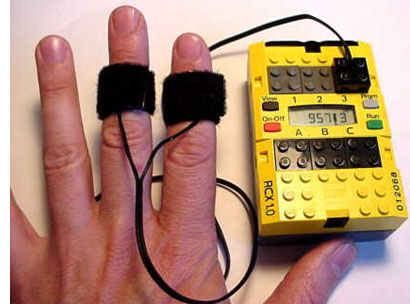
Image Of Lie Detector
Fig. 1: Image of Lie Detector 
We surely have come a long way in technological developments. Who among us would have envisioned a machine that could figure out whether a person was lying or not? There was time when finding this secret was just in hands of mystical beings or God. Isn’t it startling how a machine can read a person’s mind?
 
Inventor of Lie detector called it cardio-pneumo-psychograph. It was a magic box that had the power to peep in one’s mind and figure out who was pilfering jewelry and cash at college boardinghouse. But to future generations and newspaper reading people, this magic box was lie detector, a machine to help a way out of doubtful scientific credentials and dubious ethical aura.
 
In the era that led to birth of scientific industrial management, I.Q. test and time motion study, a group of American Inventors and the social reformers had dreamt of a device that could separate truth from the deception by measuring body responses like pulse rate, blood pressure.
 
One of the early proponents claimed that this ‘mechanical instrument of future’ would replace jury deliberations, conventional police interrogations. It would also lend a hand to government and private companies in weeding out spies, thieves. It would beam in deepest corners of human psyche and advancing works of psychiatrists. But the man behind the invention, John Larson despaired while taking his breaths and called it a Frankenstein’s monster that had sucked 40 years of his life.
 
The persistent as well as unusual grip of the lie detector on American thoughts provided rich material for Lie Detector’s invention. Various cases including that of Torso Murderers, Cleveland, story of Dick Tracy or William James stirred with scientific visions led to invention of lie detector.
 
Earliest antecedents of modern lie detector come from device that used trial by torture or ordeal. During Middle Ages in the Europe, torture was the practice that rooted from theory that stated – an agonizing body could oblige a lying mind to croak the secret out. But in 1730, this method of torture for extracting the truth from a person made an exit and a new lie detection method took over. Daniel Defoe was the earliest of men to suggest such a method through evaluation of heart rate. In 18th century, the torturous methods declined completely due to continuous campaigns against the judicial torture in the Europe. This humane way of detecting lie through lie detector was accepted by majority during this time.
 
The evolution of lie detector was slow but was a pioneering invention for the entire mankind. The emergence started slowly with the initial tests for determining the physical responses during act of deception. Cesare Lombroso also known as Father of the Modern Criminology was the first one to try of application of science for detecting deception. He made use of device known as plethysmograph that monitored changes in blood flow of person at the time of interrogation.
 
Another breakthrough came in the year 1897 with development of method to measure galvanic responses by B. Sticker. This method used amount of sweat produced on skin with the help of electric conductibility during the test. And in 1914, breathing rate measurement using the pneumatic tubing was done by Vittorio Benussi. This device was draped around the person’s chest for measuring the rate and depth of breath. Benussi discovered ratio of expiration and inspiration was usually greater at the time of truth telling than lying. This method of truth discovery by Benussi gave an important revelation that it was not just pulse rate, sweat production and the blood pressure that helped in lie detection but the breathing rates too. All these findings amalgamated together formed the modern day lie detector known as polygraph.
 
Earliest machine that took name of polygraph was originally copy machine invented by John Hawkins in year 1804. Name of the machine simply meant ‘many writings’, originated from Greek, early polygraph allowed users to write with the two pens at the same time, creating duplicate copy. In year 1908, an English doctor named James MacKenzie publicized in ink polygraph invention for monitoring cardiovascular responses of the subject taking blood pressure and pulse.
 
After a few years, in year 1915, William Marston who was American psychologist, started demonstrated lie detection tests to determine whether subject was deceptive using blood pressure cuffs for taking measurements of the systolic BP at the time of interrogation. He was of the strong view that the interrogation techniques used at conjunction with technology than technology itself that led to detection of lies.
 
As lie detector captured imagination of public, imitators soon entered the field. A doctor from Chicago doctor, Orlando Scott, endorsed Thought Wave Detector, with claims that it had the capability of tapping electrical current of brain. While suspect squirmed and sweated, a big needle sung forth and backwards between true and false option on a big dial.
 
Despite of the charlatans like Dr. Scott, lie detector made the headway in search for its respect and acceptance. In year 1923, legal decision barred the tests by lie detectors being used as the evidence in courtroom but at places like factories, government department, banks this magic box carved a place for itself offering an efficient solution for detection.
 
Advertisers too flirted briefly in various tests for finding what consumers thought about their gasoline, cigarettes and razors. Keeping censors in mind, even film executives used the findings for editing of films like Frankenstein. During cold war too, lie detectors were used by State Department for weeding Communist sympathizers out. Lie detectors have proved to be an amazingly useful technology for the world. 

Filed Under: Invention Stories
Tagged With: invention, lie detector
 

Next Article

← Previous Article
Next Article →

Questions related to this article?
👉Ask and discuss on Electro-Tech-Online.com and EDAboard.com forums.


Tell Us What You Think!! Cancel reply

You must be logged in to post a comment.

EE TECH TOOLBOX

“ee
Tech Toolbox: Internet of Things
Explore practical strategies for minimizing attack surfaces, managing memory efficiently, and securing firmware. Download now to ensure your IoT implementations remain secure, efficient, and future-ready.

EE Learning Center

EE Learning Center
“engineers
EXPAND YOUR KNOWLEDGE AND STAY CONNECTED
Get the latest info on technologies, tools and strategies for EE professionals.

HAVE A QUESTION?

Have a technical question about an article or other engineering questions? Check out our engineering forums EDABoard.com and Electro-Tech-Online.com where you can get those questions asked and answered by your peers!


RSS EDABOARD.com Discussions

  • Reducing "shoot-through" in offline Full Bridge SMPS?
  • High Side current sensing
  • How to simulate power electronics converter in PSpice?
  • Voltage mode pushpull is a nonsense SMPS?
  • Layout IRN reduction in Comparator

RSS Electro-Tech-Online.com Discussions

  • Back to the old BASIC days
  • Parts required for a personal project
  • PIC KIT 3 not able to program dsPIC
  • Failure of polypropylene motor-run capacitors
  • Siemens large industrial PLC parts

Featured – RPi Python Programming (27 Part)

  • RPi Python Programming 21: The SIM900A AT commands
  • RPi Python Programming 22: Calls & SMS using a SIM900A GSM-GPRS modem
  • RPi Python Programming 23: Interfacing a NEO-6MV2 GPS module with Raspberry Pi
  • RPi Python Programming 24: I2C explained
  • RPi Python Programming 25 – Synchronous serial communication in Raspberry Pi using I2C protocol
  • RPi Python Programming 26 – Interfacing ADXL345 accelerometer sensor with Raspberry Pi

Recent Articles

  • What is AWS IoT Core and when should you use it?
  • AC-DC power supply extends voltage range to 800 V DC
  • Infineon’s inductive sensor integrates coil system driver, signal conditioning circuits and DSP
  • Arm Cortex-M23 MCU delivers 87.5 µA/MHz active mode
  • STMicroelectronics releases automotive amplifiers with in-play open-load detection

EE ENGINEERING TRAINING DAYS

engineering

Submit a Guest Post

submit a guest post
Engineers Garage
  • Analog IC TIps
  • Connector Tips
  • Battery Power Tips
  • DesignFast
  • EDABoard Forums
  • EE World Online
  • Electro-Tech-Online Forums
  • EV Engineering
  • Microcontroller Tips
  • Power Electronic Tips
  • Sensor Tips
  • Test and Measurement Tips
  • 5G Technology World
  • Subscribe to our newsletter
  • About Us
  • Contact Us
  • Advertise

Copyright © 2025 WTWH Media LLC. All Rights Reserved. The material on this site may not be reproduced, distributed, transmitted, cached or otherwise used, except with the prior written permission of WTWH Media
Privacy Policy

Search Engineers Garage

  • Electronic Projects & Tutorials
    • Electronic Projects
      • Arduino Projects
      • AVR
      • Raspberry pi
      • ESP8266
      • BeagleBone
      • 8051 Microcontroller
      • ARM
      • PIC Microcontroller
      • STM32
    • Tutorials
      • Audio Electronics
      • Battery Management
      • Brainwave
      • Electric Vehicles
      • EMI/EMC/RFI
      • Hardware Filters
      • IoT tutorials
      • Power Tutorials
      • Python
      • Sensors
      • USB
      • VHDL
    • Circuit Design
    • Project Videos
    • Components
  • Articles
    • Tech Articles
    • Insight
    • Invention Stories
    • How to
    • What Is
  • News
    • Electronic Product News
    • Business News
    • Company/Start-up News
    • DIY Reviews
    • Guest Post
  • Forums
    • EDABoard.com
    • Electro-Tech-Online
    • EG Forum Archive
  • DigiKey Store
    • Cables, Wires
    • Connectors, Interconnect
    • Discrete
    • Electromechanical
    • Embedded Computers
    • Enclosures, Hardware, Office
    • Integrated Circuits (ICs)
    • Isolators
    • LED/Optoelectronics
    • Passive
    • Power, Circuit Protection
    • Programmers
    • RF, Wireless
    • Semiconductors
    • Sensors, Transducers
    • Test Products
    • Tools
  • Learn
    • eBooks/Tech Tips
    • Design Guides
    • Learning Center
    • Tech Toolboxes
    • Webinars & Digital Events
  • Resources
    • Digital Issues
    • EE Training Days
    • LEAP Awards
    • Podcasts
    • Webinars / Digital Events
    • White Papers
    • Engineering Diversity & Inclusion
    • DesignFast
  • Guest Post Guidelines
  • Advertise
  • Subscribe