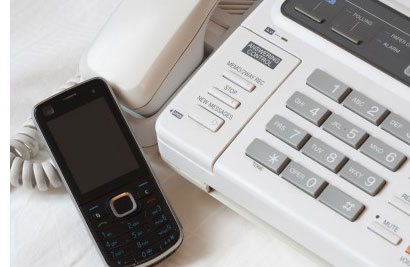
Fig. 1: Image Of Telephone Answering Machine
Have you ever wondered what went behind creating the thousands of little amenities which are so taken for granted in today’s time but evolved through many painstaking efforts to be able to see the light of day? Even the smallest and seemingly insignificant things around us have a great tale of achievement to tell; and just a close look at these will surely inundate you with numerous such inspiring invention stories.
So what is that thing which led the seeds of a small idea to be culminated into path-breaking inventions? The one thing common amongst the greatest inventors of all times was the conviction to put their ideas into action. They not only had the vision to dream of something inconceivable but also the will to translate their dreams into reality.
One such laudable example can be traced back in the history of answering machines. The luxury of receiving messages even without answering calls has been made possible only through the consistent efforts of many prominent scientists over the years.
The history of answering machines goes back a long way. The early version of what is today known as the answering machine was called the Telegraphone. It was invented by Danish engineer and inventor, Valdemar Poulsen in the year 1898. The telegraphone incorporated the technology which enabled magnetic sound recording and reproduction. The magnetic fields produced by sound were recorded on a wire which was then used to play back the sound. The American Telegraphone Company was one of the few enterprises which was transferred the rights to manufacture the Telegraphone. However the technology was unable to seep into the masses and remained somewhat obscure till the First World War. Although not very sophisticated, the telegraphone did lay the foundation for the modern answering machine and paved the way for many more improved versions.
Later in the year 1935, Willy Muller invented the first automatic answering machine. This invention became quite popular among the Orthodox Jews who were not allowed to take calls on the Sabbath. However, it was a three feet tall device and hence did not find much practical applicability.
In the meanwhile a Swiss company introduced an answering machine known as the Isophon. It was launched in the year 1936 and recorded sound on magnetic steel tapes. It was quite a bulky machine and was meant to be used only at big offices and organizations. Owing to its high price, the Isophon only managed to survive for a short while and subsequently gave way to more refined improvisations.
Back in the United States, the first commercial answering machine was launched in the year 1949 after a series of unsuccessful attempts. Known as the Tel-Magnet, it recorded the incoming message and played the outgoing message on a magnetic wire. The Tel-Magnet was priced at $200 and was unable to capture the market as a result of its high-price.
The year 1960 marked a significant turn of events with the launch of the first commercially successful answering machine known as the Ansafone. A compact and sophisticated device, the Ansafone was invented by Dr. Kazuo Hashimoto who worked for a company known as Phonetel. The distribution rights for this machine were later handed over to Dictaphone Corp.
Many such similar models were launched in the market following the success of the Ansafone. In the year 1962, a New York based company known as Robosonics Inc. introduced an inexpensive answering machine known as the Robosonic Secretary. Next to hit the market was a device called the Record-O-Phone which retrieved remote messages with the help of a whistle known as the Telekey.
Around the same time, the European market for call recording devices was picking up slowly. The use of central office call recorders was still prevalent and small automatic answering machines for individuals and homes were quite uncommon. The first of these portable machines was introduced in Europe by a company called Telefunken in the year 1966.The European market for answering machines lagged much behind that of America during the 1960’s due to a scarcity of quality products.
By the 1970’s answering machines became more convenient to use and less expensive owing to the advent of cheap microelectronics. A cheap and handy answering machine known as the PhoneMate was devised in the year 1971 specially to meet the needs of home consumers. It was a technically slick model for its times, weighing around ten pounds with a capacity to hold twenty messages on tape .It made message retrieval possible with the means of an earphone. The mid 1970’s witnessed a further drop in the prices of answering machines with the cheapest models being priced at as low as $125.With the prices hitting an all-time low, the market bloated with demand for answering machines and it became a common household commodity. The sales figures reached a whopping 400,000 units by the end of 1978.The popularity of answering machines continued to grow leaps and bounds and the sales had almost doubled within the next four years.
However, as is the case with almost all technological inventions, the answering machine too had to eventually make way for finer developments. With the emergence of cell phones and their in-built Voicemail feature, the use of answering machines started declining gradually. Also, many telephone service providers offered centralized and inexpensive voice-mail as a standard feature in home telephone lines, hence rendering the answering machine obsolete.
Voicemail revolutionized the face of digital sound recording, replacing the answering machine completely. Gordon Matthews also known as the ‘Father of Voice Mail’ made a vital contribution in the development of Voicemail. He founded the VMX Company of Dallas, Texas which was the first to produce commercial voice mail systems.
Stand-alone answering machines have almost disappeared and are a very rare sight today. However, they made communication easier for millions of people throughout many decades. Although the answering machine lived a fixed life span, it was a pioneering step in the telecom industry and the role it played in the history of recording technology cannot be disregarded. Neither can we ignore the endeavours of the inventors of the answering machine, who worked relentlessly to give the world this marvellous invention.
Filed Under: Invention Stories
Questions related to this article?
👉Ask and discuss on EDAboard.com and Electro-Tech-Online.com forums.
Tell Us What You Think!!
You must be logged in to post a comment.