Engineers Garage

  • Electronic Projects & Tutorials
    • Electronic Projects
      • Arduino Projects
      • AVR
      • Raspberry pi
      • ESP8266
      • BeagleBone
      • 8051 Microcontroller
      • ARM
      • PIC Microcontroller
      • STM32
    • Tutorials
      • Audio Electronics
      • Battery Management
      • Brainwave
      • Electric Vehicles
      • EMI/EMC/RFI
      • Hardware Filters
      • IoT tutorials
      • Power Tutorials
      • Python
      • Sensors
      • USB
      • VHDL
    • Circuit Design
    • Project Videos
    • Components
  • Articles
    • Tech Articles
    • Insight
    • Invention Stories
    • How to
    • What Is
  • News
    • Electronic Product News
    • Business News
    • Company/Start-up News
    • DIY Reviews
    • Guest Post
  • Forums
    • EDABoard.com
    • Electro-Tech-Online
    • EG Forum Archive
  • DigiKey Store
    • Cables, Wires
    • Connectors, Interconnect
    • Discrete
    • Electromechanical
    • Embedded Computers
    • Enclosures, Hardware, Office
    • Integrated Circuits (ICs)
    • Isolators
    • LED/Optoelectronics
    • Passive
    • Power, Circuit Protection
    • Programmers
    • RF, Wireless
    • Semiconductors
    • Sensors, Transducers
    • Test Products
    • Tools
  • Learn
    • eBooks/Tech Tips
    • Design Guides
    • Learning Center
    • Tech Toolboxes
    • Webinars & Digital Events
  • Resources
    • Digital Issues
    • EE Training Days
    • LEAP Awards
    • Podcasts
    • Webinars / Digital Events
    • White Papers
    • Engineering Diversity & Inclusion
    • DesignFast
  • Guest Post Guidelines
  • Advertise
  • Subscribe

Invention Story of Air Conditioner

By Samidha Verma April 5, 2011

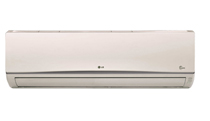
Image Of Air Conditioner(AC)

Fig. 1: Image Of Air Conditioner(AC)

Ever since the industrial age began, man has thought of hundreds of ways to outsmart nature. And out of those hundred times, man has succeeded in more than ninety nine times. Climate and weather too have been brought together as a symphony that man desires to hear. Air-conditioning is the name of the scientific method that defies unruly sun, freezing winters and humid airs. Once a sci-fi author Rober Heinklein had said “Climate is what you expect, weather is what you get.” Truly, with air-conditioner we get what we expect.

 
What we know as air conditioning is rather an innovative and as unique technology, but for ages, different techniques of dehumidifying and cooling air have always been around and practiced in different parts of the world. The seeds of this thoughtful invention called air-conditioner were sown ages back when handmade fans gave way to electric fans and coolers and finally the 21st century woke up to the AC that marked the onset of temperature ruled by man. The wealthiest of ancient Romans put to use aqua duct water and circulated it through the walls of their mansions. At the same time, the Chinese too used varied methods to keep the interiors of their buildings cool s by utilizing air and water in the hottest of time.
 
In the 1800’s, a man came as close to inventing an air-conditioner as one could. The British inventor Michael Faraday found out that Ammonia on being compressed and liquidized could help in cooling the air. Later on the same lines, John Gorrie, in the year 1841, discovered that the same compressing technology could be put to best use in his hospital in Florida. Utilizing this technology, he created ice to keep his patients’ rooms. Unlike Faraday, Gorrie didn’t stop at the mere discovery, and continued his experiments with the new found technology. He came very close to inventing the first air-conditioning unit, but unfortunately his first pro type leaked and resulted to be a failure. Instead of stepping back and disappearing in the darks of failure, Gorrie secured some funds and finally got his patent approved in the year 1851. For his hard luck, his funding partner died and left him with the shattered dream of indoor air-conditioning unrealized. Gorrie too succumbed to death in 1855 and with him, the air-conditioning science too died for the next 50 years.

Again, work started on the science of air-conditioning and the first air-conditioner was designed in 1902. It was initially designed for industrial purposes. The inventor or “Father of Cool” Willis Carrier used coils to control moisture in the air and at the same time maintain the cool to prevent wrinkling of paper in a printing plant. It was only one year after Carrier graduated with a Masters in Engineering from Cornell University that he saw the first air conditioning in operation. He figured out that he could make the Brooklyn printing plant owner happy through his air-conditioning coils. These coils created a stable environment with which aligned four-color printing could be possible.

 
Happy with the success of the first system, Carrier established the pioneer mass plant for air-conditioners. The term air-conditioning was coined by Stuart W. Cramer in the year 1906. He belonged to Charlotte, North Carolina and was finding out ways he could add moisture to the air in his textile plants. The first usage of this term happened in the papers he had filed to the patent offices for the water conditioning unit invented by him. These inventions happened parallel to each other, and fascinated by the name, Carrier took this term air-conditioning and added it to his companies’ name. 
 
The first air-conditioner was bulky, reproduced huge noises and gave out toxic chemicals too. These toxins namely, ammonia, methyl chloride and propane, were inflammable and when leaked caused fatal effects in the atmosphere and even to the human lives. In 1928, an air-conditioner was built using Freon which was considered much safer for humans though it was hazardous for the environment. Thomas Midgley was the inventor of this Freon using air-conditioner. Even after the human friendly air-conditioner was launched, the general public except those who lived luxuriously enjoyed the air-conditioning in the movie theaters alone. In the 1930s most of the theaters were utilizing the cooling technology and even during the Great Depression, people could enjoy the artificial chilly air in the theaters, even the rich proprietors, who had to give away their luxurious ACs. The system that was used in the theaters was produced by Carrier and was sold at high rates ranging between $10,000 and $50,000.
 
Air-conditioners were a luxury limited to the rich sections of the society but that was only in the early 1930s and 1940s. Slowly with steady steps, Air-conditioning walked into the corporate world and demanded the bosses to provide their employees with the comfort of ACs. Followed by a bit of retaliation at first, the bosses finally gave in and the employees worked in the comforts of artificial cold air and gave better output. The wave of air-conditioning spread world-wide and by 1957, most of the offices had air-conditioners installed as 90% of the companies according to Gail Cooper’s Air-Conditioning America saw air-conditioning as the most vital factor in the increased office efficiency.
 
America led when it came to Air-conditioner adoption and by 1980s it grew as the nation that was consuming most of the air-conditioning as compared to all the other countries combined. Soon criticism too boiled up and people started lamenting the invention that concentrated on devouring the electricity and then gave out mechanical cooling. But more than criticism, Air-conditioning has always been credited with survival and growth of various industries, the development of heat sensitive computers, and what not. If not for the Air-Conditioners, how would we have survived through the record-breaking temperatures? The bulky ACs have now shrunken and are no more noisy. The emission of chemicals too doesn’t happen and besides all these improvements efforts are continued to be made to improve air-conditioning and the emphasis is now on energy conservation and efficiency. In the nearing future we can hope to see the best of air-conditioners with distinguishing features and sophisticated technology.

Filed Under: Invention Stories
Tagged With: air conditioner, invention
 

Next Article

← Previous Article
Next Article →

Questions related to this article?
👉Ask and discuss on EDAboard.com and Electro-Tech-Online.com forums.


Tell Us What You Think!! Cancel reply

You must be logged in to post a comment.

EE TECH TOOLBOX

“ee
Tech Toolbox: Internet of Things
Explore practical strategies for minimizing attack surfaces, managing memory efficiently, and securing firmware. Download now to ensure your IoT implementations remain secure, efficient, and future-ready.

EE Learning Center

EE Learning Center
“engineers
EXPAND YOUR KNOWLEDGE AND STAY CONNECTED
Get the latest info on technologies, tools and strategies for EE professionals.

HAVE A QUESTION?

Have a technical question about an article or other engineering questions? Check out our engineering forums EDABoard.com and Electro-Tech-Online.com where you can get those questions asked and answered by your peers!


RSS EDABOARD.com Discussions

  • Reducing "shoot-through" in offline Full Bridge SMPS?
  • High Side current sensing
  • How to simulate power electronics converter in PSpice?
  • Voltage mode pushpull is a nonsense SMPS?
  • Layout IRN reduction in Comparator

RSS Electro-Tech-Online.com Discussions

  • Back to the old BASIC days
  • Parts required for a personal project
  • PIC KIT 3 not able to program dsPIC
  • Failure of polypropylene motor-run capacitors
  • Siemens large industrial PLC parts

Featured – RPi Python Programming (27 Part)

  • RPi Python Programming 21: The SIM900A AT commands
  • RPi Python Programming 22: Calls & SMS using a SIM900A GSM-GPRS modem
  • RPi Python Programming 23: Interfacing a NEO-6MV2 GPS module with Raspberry Pi
  • RPi Python Programming 24: I2C explained
  • RPi Python Programming 25 – Synchronous serial communication in Raspberry Pi using I2C protocol
  • RPi Python Programming 26 – Interfacing ADXL345 accelerometer sensor with Raspberry Pi

Recent Articles

  • What is AWS IoT Core and when should you use it?
  • AC-DC power supply extends voltage range to 800 V DC
  • Infineon’s inductive sensor integrates coil system driver, signal conditioning circuits and DSP
  • Arm Cortex-M23 MCU delivers 87.5 µA/MHz active mode
  • STMicroelectronics releases automotive amplifiers with in-play open-load detection

EE ENGINEERING TRAINING DAYS

engineering

Submit a Guest Post

submit a guest post
Engineers Garage
  • Analog IC TIps
  • Connector Tips
  • Battery Power Tips
  • DesignFast
  • EDABoard Forums
  • EE World Online
  • Electro-Tech-Online Forums
  • EV Engineering
  • Microcontroller Tips
  • Power Electronic Tips
  • Sensor Tips
  • Test and Measurement Tips
  • 5G Technology World
  • Subscribe to our newsletter
  • About Us
  • Contact Us
  • Advertise

Copyright © 2025 WTWH Media LLC. All Rights Reserved. The material on this site may not be reproduced, distributed, transmitted, cached or otherwise used, except with the prior written permission of WTWH Media
Privacy Policy

Search Engineers Garage

  • Electronic Projects & Tutorials
    • Electronic Projects
      • Arduino Projects
      • AVR
      • Raspberry pi
      • ESP8266
      • BeagleBone
      • 8051 Microcontroller
      • ARM
      • PIC Microcontroller
      • STM32
    • Tutorials
      • Audio Electronics
      • Battery Management
      • Brainwave
      • Electric Vehicles
      • EMI/EMC/RFI
      • Hardware Filters
      • IoT tutorials
      • Power Tutorials
      • Python
      • Sensors
      • USB
      • VHDL
    • Circuit Design
    • Project Videos
    • Components
  • Articles
    • Tech Articles
    • Insight
    • Invention Stories
    • How to
    • What Is
  • News
    • Electronic Product News
    • Business News
    • Company/Start-up News
    • DIY Reviews
    • Guest Post
  • Forums
    • EDABoard.com
    • Electro-Tech-Online
    • EG Forum Archive
  • DigiKey Store
    • Cables, Wires
    • Connectors, Interconnect
    • Discrete
    • Electromechanical
    • Embedded Computers
    • Enclosures, Hardware, Office
    • Integrated Circuits (ICs)
    • Isolators
    • LED/Optoelectronics
    • Passive
    • Power, Circuit Protection
    • Programmers
    • RF, Wireless
    • Semiconductors
    • Sensors, Transducers
    • Test Products
    • Tools
  • Learn
    • eBooks/Tech Tips
    • Design Guides
    • Learning Center
    • Tech Toolboxes
    • Webinars & Digital Events
  • Resources
    • Digital Issues
    • EE Training Days
    • LEAP Awards
    • Podcasts
    • Webinars / Digital Events
    • White Papers
    • Engineering Diversity & Inclusion
    • DesignFast
  • Guest Post Guidelines
  • Advertise
  • Subscribe