Engineers Garage

  • Electronic Projects & Tutorials
    • Electronic Projects
      • Arduino Projects
      • AVR
      • Raspberry pi
      • ESP8266
      • BeagleBone
      • 8051 Microcontroller
      • ARM
      • PIC Microcontroller
      • STM32
    • Tutorials
      • Audio Electronics
      • Battery Management
      • Brainwave
      • Electric Vehicles
      • EMI/EMC/RFI
      • Hardware Filters
      • IoT tutorials
      • Power Tutorials
      • Python
      • Sensors
      • USB
      • VHDL
    • Circuit Design
    • Project Videos
    • Components
  • Articles
    • Tech Articles
    • Insight
    • Invention Stories
    • How to
    • What Is
  • News
    • Electronic Product News
    • Business News
    • Company/Start-up News
    • DIY Reviews
    • Guest Post
  • Forums
    • EDABoard.com
    • Electro-Tech-Online
    • EG Forum Archive
  • DigiKey Store
    • Cables, Wires
    • Connectors, Interconnect
    • Discrete
    • Electromechanical
    • Embedded Computers
    • Enclosures, Hardware, Office
    • Integrated Circuits (ICs)
    • Isolators
    • LED/Optoelectronics
    • Passive
    • Power, Circuit Protection
    • Programmers
    • RF, Wireless
    • Semiconductors
    • Sensors, Transducers
    • Test Products
    • Tools
  • Learn
    • eBooks/Tech Tips
    • Design Guides
    • Learning Center
    • Tech Toolboxes
    • Webinars & Digital Events
  • Resources
    • Digital Issues
    • EE Training Days
    • LEAP Awards
    • Podcasts
    • Webinars / Digital Events
    • White Papers
    • Engineering Diversity & Inclusion
    • DesignFast
  • Guest Post Guidelines
  • Advertise
  • Subscribe

Beginners’ Guide to Electronics: 12 Basic Things you must know

By Neha Rastogi May 30, 2021

In today’s modern era we have all the technological assistance in the form of apps, tutorials, and online tools so as to take on our electronics projects. Despite having a non-technical background, people can work with electronics in a highly efficient and organized manner. However, before using the aforementioned methods, one has to be acquainted with certain skills that lay the basic foundation of an electronic project.

As a result, we have compiled a set of basic electronics skills for beginners that act as a pre-requisite for ensuring success. Moreover, you can utilize these while repairing a simple device or while working on your dream project. Basically, handling the electronics for a practical purpose can be really tough if you don’t know how to deal with the components involved.

So, without beating around the bush, let’s have a look at these 10 basic electronics skills for beginners -:

1. Knowledge about Basic Components
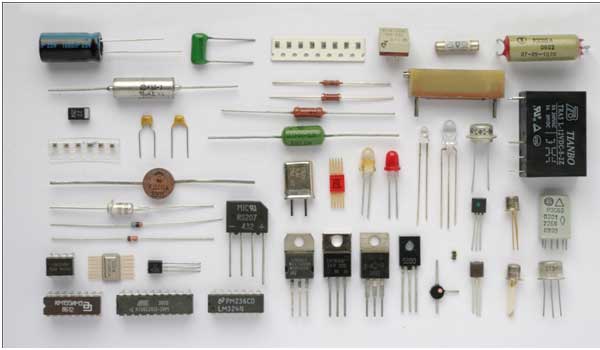
Basic components

A circuit has a lot of components categorised as active and passive. The former ones provide and control current whereas the latter ones respond to the voltage flow and dissipate/store energy. Mainly, every electronic circuit has the following components -:

• Resistor: It restricts the flow of current which is directly proportional to the voltage across the resistor terminals.
• Capacitor: It is made from 2 conductive plates with an insulator between them.
• Microcontroller: It’s a small computer on a single IC that assembles all options found in the microprocessor.
• Inductor: It’s a two-terminal coil that stores voltage in the form of magnetic energy.
• Transformer: It contains 2 coils of wires that offer the capability of changing the current and voltage levels.
• Battery: It converts chemical energy into voltage through electrochemical discharge reactions and is composed of cells having an anode (+), a cathode (-), and solution.
• Fuse: It’s a bit of wire which protects the components from destruction when excessive current flows through them.
• Diodes: Diode aka LED allows current to flow in one direction by blocking the current flowing in the opposite direction.
• Transistors: It contains 3 terminals that control the flow of voltage/current and acts as a switch for electrical signals. It can be either PNP or NPN.
• Integrated Circuit: IC aka chip is a semiconductor device, where numerous resistors, capacitors, and transistors are fabricated.
• Relays: These are switches that control the circuits by employing a low power signal.
• Switch: It interrupts the current and regulates the flow of current from one conductor to another conductor.
• Motor: It converts electrical energy into mechanical energy

2. Breadboarding

Bread boarding

You can have a detailed view of the different parts and working of a breadboard here.

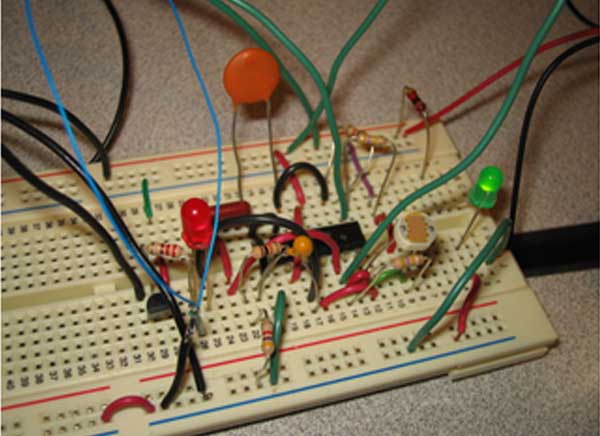
As mentioned above, a breadboard is the most basic component of a circuit and is used for solderless prototyping which is particularly useful for beginners. Prototyping creates a preliminary model which is later used for testing followed by the development of the final model. Breadboards can easily accommodate a wide range of circuits ranging from the simple to the complex ones.

So, after getting on with a project, the first thing you are required to learn is to arrange the components on a breadboard along with the connecting wires.

3. Drawing Schematics
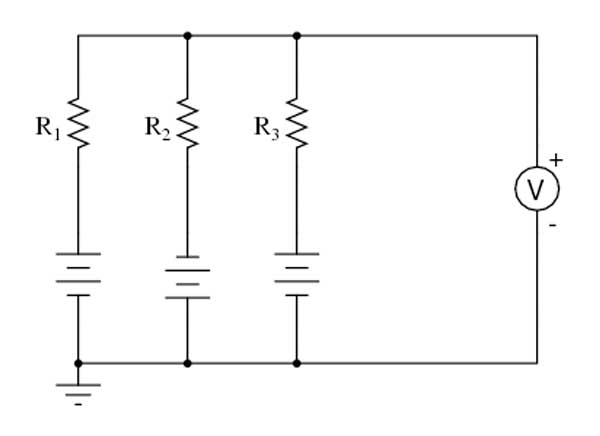
Drawing Schematics

Schematics act as universal pictograms for understanding and building the electronics. Every component discussed in the list above (and others) have a specific symbol. These symbols are combined using a variety of programs. Schematics are important so as to design the circuits and there are a lot of online circuit design tools available for the users. These apps and software offer a virtual view of the breadboard where you can learn to combine all the components of a circuit.

4. Soldering
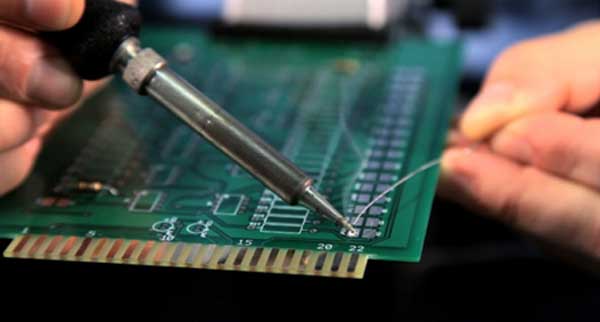
Soldering

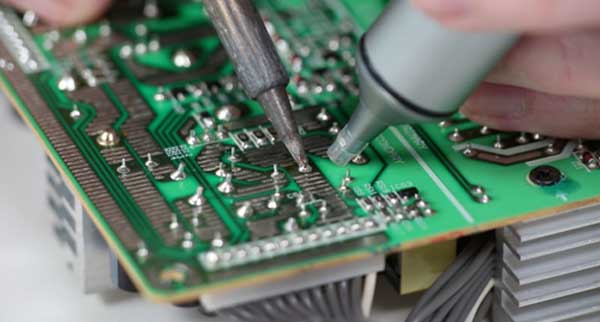
Even though you can take on solderless bread boarding but getting acquainted with the soldering technique can open up a lot of possibilities for an electronic project. Moreover, it’s easy to learn and can help in exploring a wide range of projects ranging from the simple ones to the complicated ones. In order to solder the components to a circuit, a soldering iron is used which contains the following parts -:

• Soldering Tip: It is a part of the iron that heats up and makes the solder flow around the components, thereby joining them. There are different shapes and sizes of the tips that can be used as per the need of the project.
• Wand: It is the part which holds the tip and is handled by the user. It’s made up of insulating materials so that the heat of the tip doesn’t transfer to the outer portion of the wand
• Base: It’s a control box fitted with electronics which transfers heat to the wand. It is used to adjust the temperature as per the needs of the project.
• Stand: The iron stand aka cradle holds the iron when it’s not in use. There are different varieties of cradles available in the market.
• Brass Sponge: It is used to remove the excess solder from the oxidized tips of the soldering iron.

5. De-Soldering Tools

De-Soldering tools

Note: You may read this article on soldering and de-soldering for details.

After learning the soldering skills one has to have a proper know-how of de-soldering as well. This is important for cases when you need to make changes in the circuit like for troubleshooting, repair or making any replacements. There are various tools for this purpose; usually, either a solder wick or vacuum pump is used along with the soldering iron.

In this process, the soldering iron is used to heat the part of the board where the de-soldering has to be applied and then a device is placed to suck or remove the unwanted component. It’s important to note that a soldering iron ranging between 15W-30W should be utilised because a higher wattage may damage the board as well as the components with the excess of heat.

6. Using a Multimeter
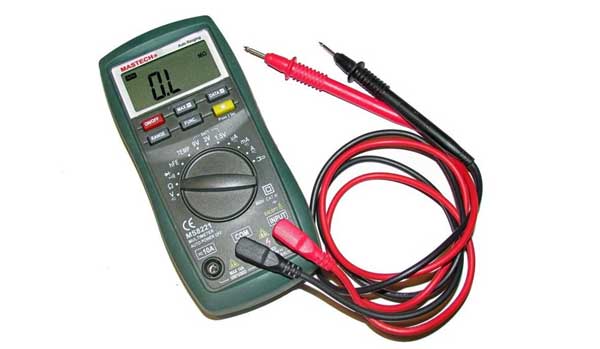
Multi-meter

You may also read our Tutorial on using a multimeter for continuity.

A multimeter is an important tool for measuring voltage, current, resistance, and continuity of a circuit. It’s also used for testing a battery and for troubleshooting problems found in an electrical device. Basically, there are three parts of a multimeter including a display screen (for digital type), selection knob and a couple of ports.

Besides, the types of probes available for this tool also vary, such as alligator clips, IC hooks, test probes, and tweezers. These devices are available in a wide variety ranging from the low-cost ones with basic features to the expensive ones with advanced features like auto off and auto-ranging facilities.

7. Hot glue guns
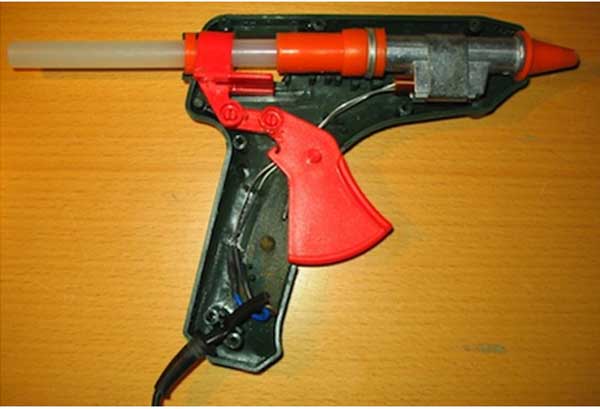
Hot Glue Guns

Hot glue guns are very useful in electronic projects whenever there is a need to stick certain components. These guns contain plastic which acts as an insulator and hence reduces the chance of a short circuit. It’s available at a low cost and is easy to use.

The kit offers a gun and some glue sticks which are inserted in the gun. After that when the trigger is pulled, the hot glue drips out of the nozzle. However, because of the heated glue, it’s important to be cautious as an excess of heat may damage your board and components. Another important thing is to keep the nozzle clean by removing any glue residue with the help of an aluminum foil.

8. Liquid electrical tape
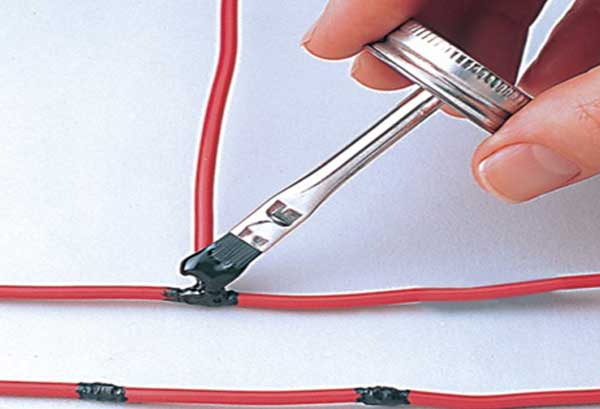
Liquid Electrical tape

It’s a rubber fluid compound which is mainly used when the insulation of a wire is broken. It prevents moisture to enter the place and is quite easy to apply. Before using it, one has to make sure that the place is completely free of moisture and there are no cracks or loose portions.

To make use of this tape, just stir the liquid and spread it over the desired place with the help of a brush. It’s important to note that 30% of its compounds are volatile and hence it should not be brought near any kind of open flame. It’s a great replacement for electrical tape and heat shrink tapes at tight enclosures.

9. Testing
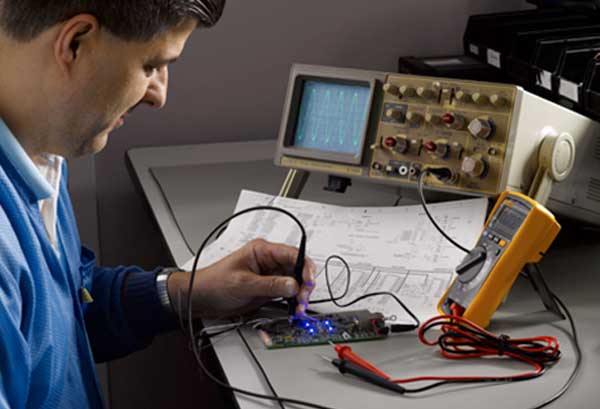
Testing

Apart from the measurement of voltage, current, and resistance; there are various stages where one has to conduct tests so as to make sure that everything is going on correctly with the project. At first, the continuity test is performed in Off position to ensure that one point of the board is connected to the other point. It’s also helpful in detecting a short circuit condition.

Later, the multimeter is used to measure the voltage and current at the desired points on the board. After this, the power is switched on and then the code is tested for errors by determining the readings in the form of 0 and 1. Overall, there are different phases depending upon the complexity of the project whereby testing has to be conducted until everything starts working as per the plans.

10. Working with wires
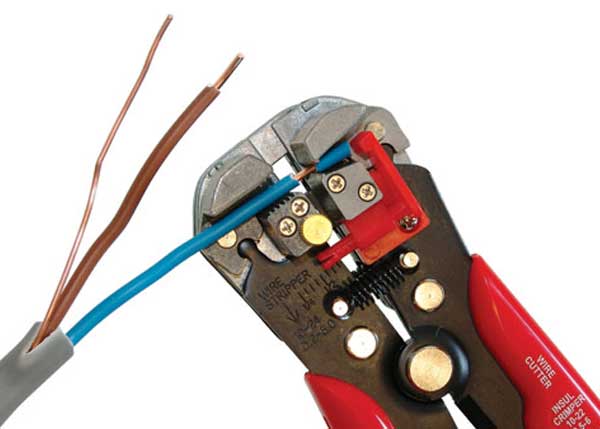
Working with wires

While taking on electronic projects, you will come across situations when you’ll have to work on the wires by cutting and stripping them. For this purpose, there are various tools available in the market but it’s important to select a proper tool so that no damage is caused to the components or circuit. Following is the list of wire strippers that you can choose from.

• Adjustable wire stripper:
It’s a scissor kind of tool with a notch cut out and it costs around $1.25. It may damage the wire if slipped out of adjustment.
• Gauge Stripper:
It’s the most common kind of stripper that can be availed at an affordable price and doesn’t require any adjustment.
• Self Adjusting automatic wire stripper:
These are automatic wire stripper whereby the user has to just place the wire at its mouth and squeeze the handle. It’s expensive but works fast than the rest of the tools.
• Gauged Automatic Wire Stripper:
It’s a combination of gauged and self-adjusting stripper. It works by grabbing the wire and closing its jaws after which the insulation is pulled free.

11. Power Source of the project

Power source of project

An important consideration for building an electronic circuit is to decide the source of power supply. Apart from that, you need to determine the voltage and current needed by the project. The next thing you must know is how to connect the power supply to the circuit.
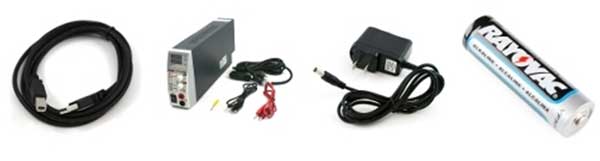
There are four sources of supplying power listed below -:
• USB cable: if you are using a basic development board
• Variable DC bench power supply: if you are running a business.
• AC to DC power supply: when the same development board is used again and again.
• Batteries: when the project is based in a remote location where wall power outlets can’t be accessed

12. Ensuring safety

Ensuring Safety

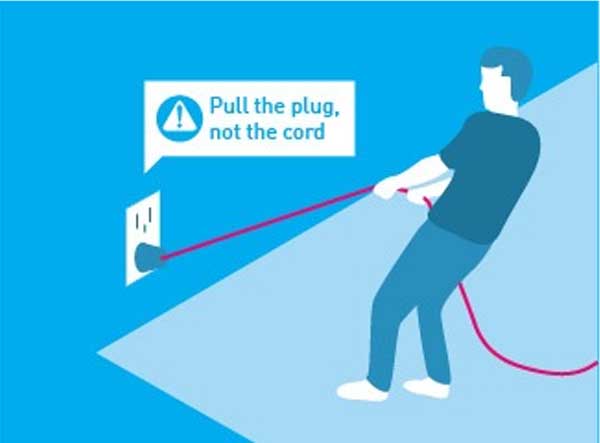
Ensuring safety is always important irrespective of the kind of project and the expertise level of the user. However, the beginners need to pay special attention as they have a lack of experience in handling situations. So make sure that you go through the following tips for that

          • Wear safety goggles and gloves when the situation demands so.

          • Make sure that the power is switched off before working on the circuit.

• Keep the area dry and your body parts free of perspiration.
• Be cautious with the soldering iron and make sure its wattage doesn’t exceed the recommended figures.
• When you sense anything is burning, immediately switch off the power and check the circuit.
• Make sure that your work area is properly ventilated.
• Have a fire extinguisher and first aid kit near your work area
This above-mentioned list includes a very basic guideline for the beginners working in electronics projects. This is just the outline, while in practice, each of these skills, concepts and terminologies have to be studied in detail. However, if you have the proper know-how about these basic electronics skills for beginners, you will be able to carry out your projects and experiments quite efficiently.

You may read our blog and article section for more topics on electronics engineering, industry, and technology.


Filed Under: Tech Articles


Next Article

← Previous Article
Next Article →

Questions related to this article?
👉Ask and discuss on Electro-Tech-Online.com and EDAboard.com forums.


Tell Us What You Think!! Cancel reply

You must be logged in to post a comment.

EE TECH TOOLBOX

“ee
Tech Toolbox: Internet of Things
Explore practical strategies for minimizing attack surfaces, managing memory efficiently, and securing firmware. Download now to ensure your IoT implementations remain secure, efficient, and future-ready.

EE Learning Center

EE Learning Center
“engineers
EXPAND YOUR KNOWLEDGE AND STAY CONNECTED
Get the latest info on technologies, tools and strategies for EE professionals.

HAVE A QUESTION?

Have a technical question about an article or other engineering questions? Check out our engineering forums EDABoard.com and Electro-Tech-Online.com where you can get those questions asked and answered by your peers!


RSS EDABOARD.com Discussions

  • High Side current sensing
  • Voltage mode pushpull is a nonsense SMPS?
  • Reducing "shoot-through" in offline Full Bridge SMPS?
  • How to simulate power electronics converter in PSpice?
  • Layout IRN reduction in Comparator

RSS Electro-Tech-Online.com Discussions

  • Back to the old BASIC days
  • Parts required for a personal project
  • PIC KIT 3 not able to program dsPIC
  • Failure of polypropylene motor-run capacitors
  • Siemens large industrial PLC parts

Featured – RPi Python Programming (27 Part)

  • RPi Python Programming 21: The SIM900A AT commands
  • RPi Python Programming 22: Calls & SMS using a SIM900A GSM-GPRS modem
  • RPi Python Programming 23: Interfacing a NEO-6MV2 GPS module with Raspberry Pi
  • RPi Python Programming 24: I2C explained
  • RPi Python Programming 25 – Synchronous serial communication in Raspberry Pi using I2C protocol
  • RPi Python Programming 26 – Interfacing ADXL345 accelerometer sensor with Raspberry Pi

Recent Articles

  • What is AWS IoT Core and when should you use it?
  • AC-DC power supply extends voltage range to 800 V DC
  • Infineon’s inductive sensor integrates coil system driver, signal conditioning circuits and DSP
  • Arm Cortex-M23 MCU delivers 87.5 µA/MHz active mode
  • STMicroelectronics releases automotive amplifiers with in-play open-load detection

EE ENGINEERING TRAINING DAYS

engineering

Submit a Guest Post

submit a guest post
Engineers Garage
  • Analog IC TIps
  • Connector Tips
  • Battery Power Tips
  • DesignFast
  • EDABoard Forums
  • EE World Online
  • Electro-Tech-Online Forums
  • EV Engineering
  • Microcontroller Tips
  • Power Electronic Tips
  • Sensor Tips
  • Test and Measurement Tips
  • 5G Technology World
  • Subscribe to our newsletter
  • About Us
  • Contact Us
  • Advertise

Copyright © 2025 WTWH Media LLC. All Rights Reserved. The material on this site may not be reproduced, distributed, transmitted, cached or otherwise used, except with the prior written permission of WTWH Media
Privacy Policy

Search Engineers Garage

  • Electronic Projects & Tutorials
    • Electronic Projects
      • Arduino Projects
      • AVR
      • Raspberry pi
      • ESP8266
      • BeagleBone
      • 8051 Microcontroller
      • ARM
      • PIC Microcontroller
      • STM32
    • Tutorials
      • Audio Electronics
      • Battery Management
      • Brainwave
      • Electric Vehicles
      • EMI/EMC/RFI
      • Hardware Filters
      • IoT tutorials
      • Power Tutorials
      • Python
      • Sensors
      • USB
      • VHDL
    • Circuit Design
    • Project Videos
    • Components
  • Articles
    • Tech Articles
    • Insight
    • Invention Stories
    • How to
    • What Is
  • News
    • Electronic Product News
    • Business News
    • Company/Start-up News
    • DIY Reviews
    • Guest Post
  • Forums
    • EDABoard.com
    • Electro-Tech-Online
    • EG Forum Archive
  • DigiKey Store
    • Cables, Wires
    • Connectors, Interconnect
    • Discrete
    • Electromechanical
    • Embedded Computers
    • Enclosures, Hardware, Office
    • Integrated Circuits (ICs)
    • Isolators
    • LED/Optoelectronics
    • Passive
    • Power, Circuit Protection
    • Programmers
    • RF, Wireless
    • Semiconductors
    • Sensors, Transducers
    • Test Products
    • Tools
  • Learn
    • eBooks/Tech Tips
    • Design Guides
    • Learning Center
    • Tech Toolboxes
    • Webinars & Digital Events
  • Resources
    • Digital Issues
    • EE Training Days
    • LEAP Awards
    • Podcasts
    • Webinars / Digital Events
    • White Papers
    • Engineering Diversity & Inclusion
    • DesignFast
  • Guest Post Guidelines
  • Advertise
  • Subscribe