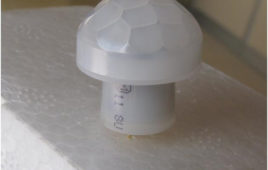
The modern world is filled with gadgets that get excited when they sense human motion. Automatic doors in elevators and shopping malls, burglar alarms at houses and shops, automatic lighting systems, electronic amenities in washrooms are just a few examples where human presence or absence puts the device into active or passive state. Smart, right? Now, what if we tell you that behind this smart response to motion is a gizmo that does not even reach the 2cm mark in size. Known as Pyroelectric or Passive Infrared Sensor (PIR, in both cases), this small electronic device is the curious case for this Insight.How does PIR sensor selectively responds to human radiated IRs? Upto what range can this sensor work? What lies inside this sensor that makes it work? This and answers to more questions in this Insight on PIR sensors. What adds more charm to this Insight is that the Panasonic 10m sensor taken is also one of the smallest PIR sensors commercially available till date.
Insight – Learn the Workings of a Gas Sensor
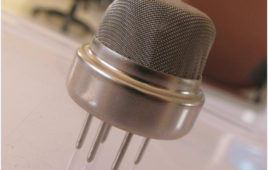
In current technology scenario, monitoring of gases produced is very important. From home appliances such as air conditioners to electric chimneys and safety systems at industries monitoring of gases is very crucial. Gas sensors are very important part of such systems. Small like a nose, gas sensors spontaneously react to the gas present, thus keeping the system updated about any alterations that occur in the concentration of molecules at gaseous state. Gas sensors are available in wide specifications depending on the sensitivity levels, type of gas to be sensed, physical dimensions and numerous other factors. This Insight covers a methane gas sensor that can sense gases such as ammonia which might get produced from methane. When a gas interacts with this sensor, it is first ionized into its constituents and is then adsorbed by the sensing element. This adsorption creates a potential difference on the element which is conveyed to the processor unit through output pins in form of current. What is this sensing element? Is it kept in some chamber or is kept exposed? How does it get current and how it is taken out? Let’s find out in this Insight!!!
Insight – Learn the Working of Ultrasonic Sensors
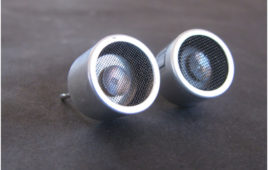
Ultrasonic sensors are devices that use electrical–mechanical energy transformation to measure distance from the sensor to the target object. Ultrasonic waves are longitudinal mechanical waves which travel as a sequence of compressions and rarefactions along the direction of wave propagation through the medium. Apart from distance measurement, they are also used in ultrasonic material testing (to detect cracks, air bubbles, and other flaws in the products), Object detection, position detection, ultrasonic mouse, etc.These sensors are categorized in two types according to their working phenomenon – piezoelectric sensors and electrostatic sensors. Here we are discussing the ultrasonic sensor using the piezoelectric principle. Piezoelectric ultrasonic sensors use a piezoelectric material to generate the ultrasonic waves.
Insight – Learn the workings of a capacitive touch sensor
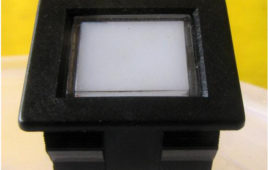
Everything in today’s digital devices world is becoming a touch away. Whether it is filling an early morning coffee mug or setting the timer for washing machine or turning ON the display of your PC.Capacitive Touch Technology is widely used in touch sensing devices. Less time response and environment adaptive features made it popular between the manufacturers. Some more applications are water purifiers, kitchen appliances, vending machines and switches.Most of us have surely come across capacitive touch sensor in our day to day life but how many of us thought about the working principle behind it.Change in capacitance is used to sense the touch in capacitive display. Amazed? How can a two metal plate component which stores charge can sense the touch? Answer to the above question will be explored in this Insight.
How to build a smart system using Arduino that alerts drivers of fatigue

Road safety is a critical concern, with driver fatigue and distractions among the leading causes of accidents. In this project, we’ll devise a smart system using Arduino UNO and a blink-eye sensor to monitor driver alertness. If the driver shows signs of drowsiness, the system takes proactive measures to prevent a potential accident. This includes…
How to build a smart clock that measures temperature and humidity
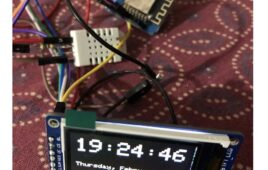
These smart clocks, powered by the ESP8266 D1 Mini, offer more than just timekeeping. In addition to displaying the current time, they measure temperature and humidity, making them versatile tools for monitoring environmental conditions. Equipped with a DHT22 sensor, these clocks provide accurate air temperature and humidity readings, displayed alongside the time on a 1.8-inch…
How to use a wireless joystick to remotely control two servo motors

A dc servo motor provides precise motion control, enabling accurate positioning and speed regulation in various applications. It consists of a rotary or linear actuator, which allows for such precise control of angular or linear position, velocity, and acceleration. It’s used in several sectors, including: Robotics Industrial automation Angular load positioning Avionics Automobiles A few…
How to build an alcohol detector with the MQ3 gas sensor
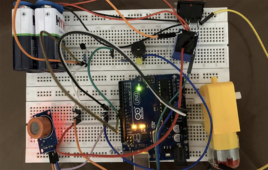
Depending on the country, as many as 25 to 35% of motor vehicle accidents happen because of drunk driving every year. When drivers consume alcohol, they not only put themselves at risk but others on the road. Fortunately, such accidents are preventable with a combination of education, personal responsibility, and community efforts. There are also…
How to design a heart-rate monitor using LoRa and Arduino

In this electronics project, we’ll design a healthcare solution over LoRa, using an Arduino Nano and a heart-rate sensor connected via the I2C bus. This device demonstrates the potential of the Internet-of-Things (IoT) in enhancing healthcare services and improving patient outcomes. The system measures a person’s heart rate in beats per minute (BPM) from a…
How to build an IoT-based flood monitor using ESP8266
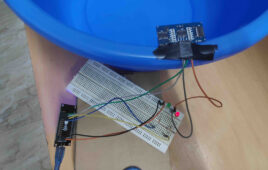
Floods are generally considered natural disasters. Depending on their severity, they can have a devastating impact on human life, agriculture, and infrastructure. In serious cases, floods can result in significant economic losses due to property damage, disruption of transportation, and the cost of emergency response and recovery efforts. This is why, flood monitoring is crucial…
How to build an Arduino-based biometric voting machine
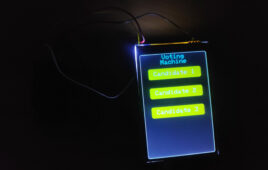
Typical electronic voting machines require voters to push a button to cast their ballots. However, there have been security concerns with these devices and whether they’re at risk for tampering. One solution is to use biometric-based voting machines, which use fingerprint matching or a retina scan to verify an authorized voter. In this project, we’ll…
How to design a security system that sounds like a guard dog
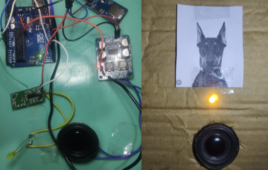
It’s been said that one of the best home security systems is owning a dog. In this do-it-yourself (DIY) circuit, we’ll design a unique system that lets you take advantage of a guard dog for security without ever needing to walk or feed it. This DIY system “barks” like a dog whenever motion is detected…
Infineon launches XENSIV tire pressure sensor

Infineon Technologies is combining its proven automotive expertise with its patented glass-silicon-glass MEMS sensor for the automotive tire pressure monitoring system (TPMS) market to launch the XENSIV SP49 tire pressure-monitoring sensor. The sensor integrates MEMS sensors and ASIC and provides smart tire features that enable advanced tire pressure monitoring systems. It features a powerful 32-bit…
Infineon launches XENSIV radar sensor for healthcare and consumer electronics
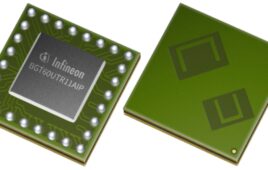
Infineon Technologies introduces the new XENSIV 60 GHz radar sensor BGT60UTR11AIP. With a compact size of only 16 mm², it’s the smallest 60 GHz radar sensor with antennas in package (AIP) on the market and is specifically designed for integration into the smallest devices. This makes the sensor ideal for vital sensing (heart and respiratory…
STMicroelectronics introduces IR sensor for presence and motion detection
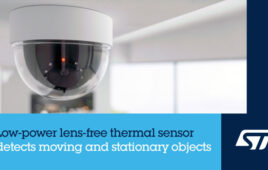
STMicroelectronics, a global semiconductor provider serving customers across the spectrum of electronics applications, is launching a novel human presence and motion detector to enhance security systems, home automation equipment, and IoT devices that typically use passive infrared (PIR) sensing. The STHS34PF80 sensor contains thermal transistors that can detect stationary objects, unlike conventional PIR detectors that require the…
STMicroelectronics launches market-first waterproof MEMS pressure sensor

STMicroelectronics, a global semiconductor provider serving customers across the spectrum of electronics applications, has introduced the market’s first MEMS water/liquid-proof absolute pressure sensor with a declared 10-year longevity program for the industrial market. “With the spread of the Industrial Internet of Things, companies are seeking to gather data from throughout their operations, often in challenging…
Infineon’s new image sensor works with time-of-flight principle

Infineon Technologies AG, in cooperation with 3D Time-of-Flight specialist and premium partner pmdtechnologies, is introducing the IRS2975C imager sensor — a performance-push evolution of the IRS2875C. The imager works according to the Time-of-Flight (ToF) principle known as indirect ToF (i-ToF) and is the first in the industry based on Infineon’s latest advancements in pixel technology.…
What is LiDAR and how does it work?
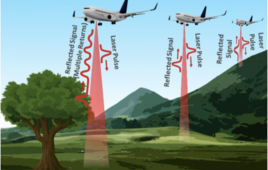
LiDAR is an acronym for light detection and ranging, an optical technology for sensing distance. Early attempts to measure distance by light beams were first made in the ’30s, and airborne LiDAR became more commonly used in the ’60s, with geospatial measurements beginning in the ’80s. As the technology evolved, LiDAR’s uses continued to expand.…
STMicroelectronics’ automotive sensor controls in-cabin acoustics

STMicroelectronics, a global semiconductor, is enabling more acoustically comfortable cars, with its new sensor for road-noise cancellation (RNC) through active noise-control (ANC) techniques. Vehicles have traditionally been defined by engine performance, exterior design, and powertrains, but drivers and passengers are increasingly focused on comfort. While electric vehicles (EVs) are intrinsically less noisy than internal combustion…
STMicroelectronics and Smart Eye demonstrate 1-LED driver-monitoring system

Smart Eye, specializing in artificial intelligence (AI) to build technology that supports and predicts human behavior, and STMicroelectronics, a global semiconductor provider, announced the cooperative development of a high-sensitivity, 1-LED driver-monitoring system (DMS). Combining Smart Eye’s expertise in driver-monitoring algorithms and optical system design with ST’s high-sensitivity automotive-grade global-shutter VB56G4A imager, the new DMS reduces…