Traffic light systems have been in use for over 100 years. However, urban mobility faces new challenges worldwide with rising population densities, expanding road networks, and increasing car ownership. Originally designed to manage traffic with minimal human intervention, today’s traffic light systems are expected to do much more. They now play a critical role in reducing congestion, improving road safety, and supporting the efficient operation of urban transportation systems.
As the Internet of Things (IoT) transforms infrastructure, traffic light systems are also evolving. Modern traffic light systems are a key component of the smart city concept. These systems integrate with sensors, video analytics, and edge devices to monitor and manage city transportation in real-time, improving traffic flow and enabling more responsive urban mobility solutions.
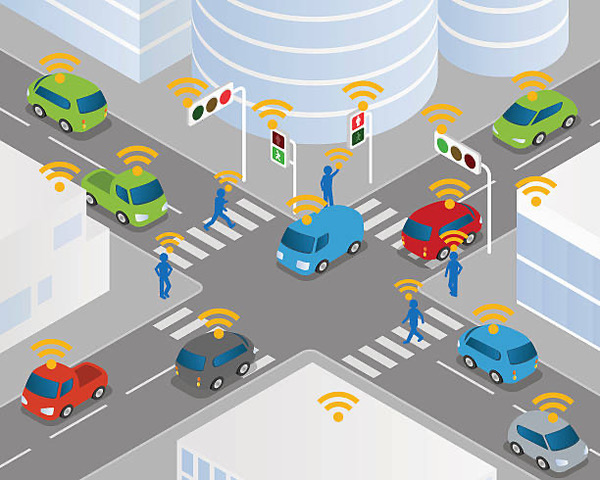
In this article, we’ll discuss smart traffic light systems and explore how they work. Smart traffic light systems are one of the most crucial IoT networks and are expected to impact our daily lives significantly in the near future. Many metropolitan cities are investing in these systems and developing unique transportation models to meet growing mobility demands.
What is a smart traffic light system?
A smart traffic light system is an advanced traffic management solution that uses sensors, edge devices, video systems, artificial intelligence, and communication technologies to dynamically control traffic flow through a cloud-based platform. It integrates technologies like computer vision, the IoT, and artificial intelligence to manage high-volume urban traffic efficiently.
Unlike conventional traffic lights, which operate on fixed timing cycles, smart traffic lights can adjust their real-time timing based on actual traffic conditions. These systems are cloud-connected IoT networks designed for intelligent traffic management. They collect real-time traffic data through various sensors such as induction loops, video cameras, infrared sensors, radar, LiDAR, acoustic sensors, and even mobile or GPS data. The data is then processed on a cloud-based platform using AI algorithms to adapt signal timings at intersections and prevent traffic bottlenecks dynamically.
In the future, Vehicle-to-Infrastructure (V2I) communication may enable direct interaction between vehicles and traffic lights, improving flow and alerting drivers to upcoming signal changes. Many smart traffic light systems under development are designed to function as centralized management systems, capable of monitoring and controlling an entire network of signals across a city.
At the core of these systems is Adaptive Traffic Signal Control (ATSC). ATSC refers to the strategies and algorithms that allow traffic lights to adjust in real-time based on actual conditions — it serves as the system’s “brain.”
Some smart systems also include features like intelligent traffic signs that change recommended speed limits based on weather, traffic, or road conditions. Typically, these systems are optimized to prioritize public transport and provide specialized controls for emergency vehicles. Ultimately, they aim to reduce traffic congestion and enhance road safety through more responsive and efficient urban transportation.
Understanding how smart traffic light systems work
A smart traffic light system is a specialized IoT network designed and deployed for traffic signaling and urban transportation management. Like a typical IoT system with multiple edge devices connected to a cloud platform, a smart traffic light system consists of several roadside units and a centralized cloud control center. The roadside units collect real-time traffic data and sense the current traffic environment.
Data collection is a key function within a smart traffic management grid. It gathers detailed information about traffic conditions using various sensors installed at intersections. These sensors may include one or more of the following:
Inductive loop detectors (ILDs): These are traditional sensors used in traffic light systems. ILDs consist of loops of insulated wire embedded beneath the road surface. As vehicles, mostly metallic, pass over or stop within the loop, a roadside electronic unit detects their presence due to a change in the loop’s inductance. ILDs help detect vehicle presence, count, and occupancy.
Multiple loops, placed at regular intervals, can also help detect vehicle speed and length. This method is cost-effective but often requires cutting into the pavement, which can disrupt existing road infrastructure.
Radar: These sensors emit radio waves and analyze the reflected signals to determine a vehicle’s presence, speed, and distance. Doppler radar systems can also measure vehicle speed by detecting shifts in frequency. Some advanced radar systems can classify vehicle types and even detect pedestrian movement.
Although radar sensors can cover multiple lanes, are weather-resistant, and offer non-intrusive installation, they may struggle to collect data accurately in heavy traffic or when vehicles are closely spaced. They’re also more costly than conventional sensors like ILDs.
LiDAR: Like radar, which uses radio waves, LiDAR (light detection and ranging) sensors use laser beams to measure the distance to objects. This allows LiDAR to create a detailed 3D point cloud of the surrounding environment. LiDAR sensors are highly accurate in predicting vehicles’ type, position, and speed and can provide a precise 3D representation of real-time traffic conditions. However, they have a shorter range compared to radar systems, are not weather-proof, and tend to be more expensive.
IR sensors: Infrared (IR) sensors detect vehicles by sensing the heat or infrared radiation they emit. There are two types of IR sensors: passive and active. Passive infrared sensors detect vehicles by sensing the heat they naturally emit, while active infrared sensors emit IR beams and detect reflections or interruptions to identify vehicle presence.
IR sensors can detect vehicles, count them, and — if advanced enough — classify vehicles and determine their speed. These are low-cost sensors that perform well even in low-light conditions. However, their functionality is basic, and they are not weather-proof.
Connected cameras: This system involves a network of video cameras mounted on poles or traffic signal structures. These cameras provide real-time video feeds of intersections and surrounding areas. The video is analyzed to determine vehicle count, speed, classification, occupancy, turning movements, and length.
Connected cameras offer a rich set of traffic data and are non-intrusive, with a single camera often covering multiple lanes. However, they come with high initial costs, and their accuracy depends heavily on deployment strategy. Video quality may also be affected by lighting and weather conditions.
Magnetometers: These sensors function similarly to inductive loop detectors (ILDs) but without physical loops. They detect changes in the Earth’s magnetic field caused by vehicle movement. Magnetometers can detect vehicle presence, count, and occupancy and, when deployed in networks, estimate vehicle speed. They’re more robust and less intrusive than ILDs, though their accuracy can be affected by underground pipes and nearby metallic objects.
Acoustic sensors: These sensors use microphones to detect and analyze vehicle sound patterns. They’re useful for detecting the presence and class of vehicles, but their accuracy can be influenced by ambient noise.
In addition to these sensors, roadside traffic light units include connectivity modules and onboard computers. These modules use Wi-Fi, 4G/5G networks, and/or GPS to collect data from connected cars, cloud-based traffic platforms, travel apps, onboard vehicle computers, and telematics systems. Granular data from individual vehicles helps predict precise speeds, driver intent, and acceleration or deceleration patterns. Telematics systems can notify the cloud of accidents or road hazards, prompting nearby traffic signals to adjust their timings accordingly.
Connected vehicles and even vulnerable road users (VRUs), such as pedestrians carrying smartphones or cyclists with tracking devices, can transmit their presence and intentions to traffic lights. This may lead to extended green times for pedestrians crossing busy intersections. Connectivity modules are also valuable for emergency vehicle prioritization, enabling traffic signals to transition to green more efficiently for ambulances or fire trucks navigating through congestion.
Roadside units may also include V2I technologies, such as Dedicated Short-Range Communications (DSRC) and Cellular Vehicle-to-Everything (C-V2X).
The onboard computers in the roadside units pre-processed captured traffic data and performed adaptive control functions. This data is processed by a powerful edge computer using specialized software. These onboard systems may leverage machine learning algorithms and artificial intelligence to analyze raw traffic data, identify patterns, calculate queue lengths and travel times, and measure traffic volume and density. This analysis often considers factors such as time of day, day of the week, VIP movements, and special events.
On-edge traffic data processing is typically sufficient for analyzing vehicle movement, estimating traffic volume, and adjusting green light durations. It allows the system to extend or shorten green phases, change cycle lengths, alter phase sequences if necessary, create green corridors, extend pedestrian walk signals, and prioritize emergency vehicles.
The data from roadside edge units is then transmitted to a central cloud control center. It’s used for advanced traffic modeling, enabling coordinated signal timing across multiple intersections and supporting predictive analysis to prevent congestion. The cloud system continuously evaluates the effects of its adjustments through sensor feedback, creating a learning loop that improves responsiveness over time.
Smart traffic light features
Adaptive Traffic Signal Control (ATSC): ATSC is the core intelligence behind smart traffic light systems. It uses sensors such as video cameras, induction loops, and radar to continuously monitor traffic flow parameters like volume, occupancy, speed, queue length, and turning movements. This real-time data is analyzed using AI to detect current traffic patterns and short-term fluctuations.
Based on this analysis, the system adapts green time durations, modifies cycle lengths, and may adjust phase sequencing and offsets in coordinated signal systems as needed.
Eco-driving mode: Smart traffic systems encourage eco-driving by providing longer, consistent green waves along corridors. This helps vehicles maintain steady speeds and reduces the frequency of stops, which minimizes abrupt acceleration and deceleration.
In the future, connected traffic lights may communicate optimal driving speeds directly to vehicles or navigation apps to help drivers time their arrival at the next green signal. These smoother driving patterns help reduce fuel consumption and emissions.
Emergency Vehicle Signal Preemption (EVSP): EVSP is a critical safety feature that allows emergency vehicles (such as ambulances, fire trucks, and police cars) to request and receive priority at intersections. These vehicles can be detected using acoustic sensors, automatic vehicle location systems, video analytics, or RF transmitters.
Once detected, the system identifies the vehicle’s direction and adapts the traffic signals to clear a green path. This may involve changing red lights for conflicting traffic, activating green lights at successive intersections, and temporarily extending green phases before returning to standard operations.
Micro-mobility priority service: Smart traffic light systems support safer travel for micro-mobility users, including cyclists, e-bikes, and scooter riders. These users may be detected through high-resolution radar, advanced video analytics, or communication from smart micro-mobility devices.
Once identified, the system can offer exclusive green phases or extended green time for safer crossing. Features like leading pedestrian intervals (LPIs) may give pedestrians and cyclists a head start before general vehicle traffic begins to move. Smart push buttons can also allow cyclists to request signal changes directly.
An important role in smart cities
Smart cities cannot be truly intelligent without smart traffic light systems. These systems are essential in modern traffic environments to improve traffic flow and reduce congestion. In addition to traffic control, smart traffic light systems serve as valuable sources of real-time and historical data — critical for urban planning, transportation modeling, and mobility management.
These systems also enhance road safety. Most smart traffic systems are optimized to reduce red-light running, prioritize emergency vehicles, and improve pedestrian and cyclist safety. By promoting eco-driving, they help reduce vehicle idling and lower emissions. Intelligent traffic signals can prioritize buses and trams by extending green signals or shortening red lights, improving the efficiency of public transport and encouraging higher ridership.
Overall, smart traffic light systems contribute to the prevention of traffic crashes, property damage, and loss of life.
Deployment challenges
Despite their benefits, there are several key challenges in implementing smart traffic light systems:
High initial cost and infrastructure upgrade: Deploying a smart system requires significant investments in various components, such as sensors, controllers, communication networks, software platforms, and sometimes new traffic signal hardware.
In cities with many intersections, these costs can add up quickly. Retrofitting existing infrastructure is often a significant hurdle. Although traditional traffic light hardware can last up to 30 years with proper maintenance, few legacy systems are compatible with cameras, radar equipment, or modern sensors.
Integration and interoperability: Smart traffic light systems are complex IoT networks that must integrate diverse hardware and software components. Compatibility between these elements can be difficult if common standards are not followed. Additionally, integration with other urban systems — such as public transport management, emergency response services, or smart parking platforms — requires careful planning and adherence to standardized communication protocols.
Big data challenges: These systems generate vast amounts of varied traffic data. Ensuring the reliability and accuracy of such high-volume, variable data is critical for informed decision-making and efficient system performance.
Dependence on communication networks: Real-time operation relies heavily on robust and stable communication infrastructure. Maintaining consistent connectivity can be a significant challenge in densely populated areas or regions with challenging geography. Furthermore, the risk of cyberattacks remains a concern, making it essential to implement strong network security measures.
Sensor reliability and maintenance: Smart traffic systems rely on numerous sensors exposed to environmental stressors such as heat, dust, and rain. To function accurately over time, these sensors require regular maintenance, calibration, repair, or replacement.
You may also like:


Filed Under: Tech Articles
Questions related to this article?
👉Ask and discuss on Electro-Tech-Online.com and EDAboard.com forums.
Tell Us What You Think!!
You must be logged in to post a comment.